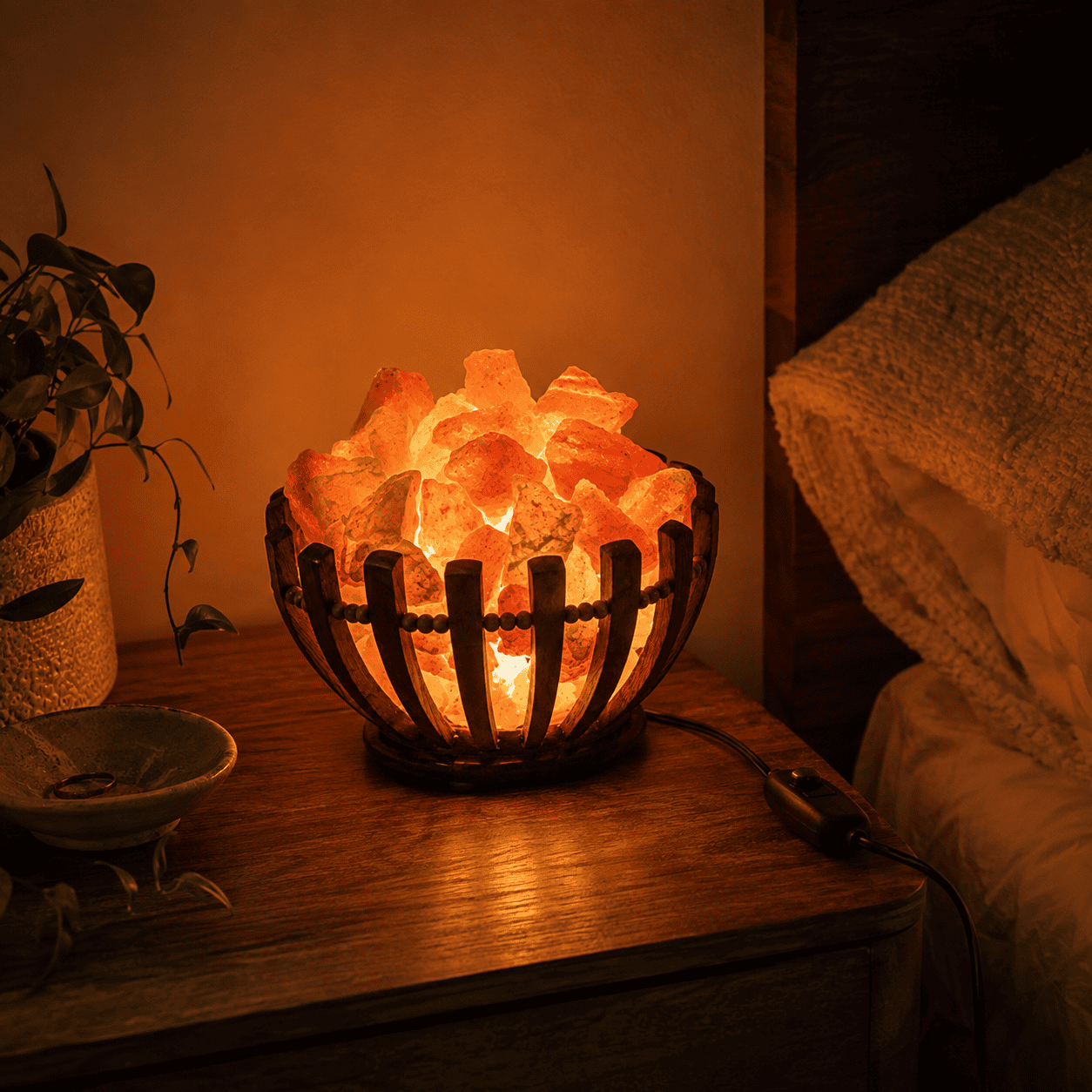
Salt lamp ambiance explained: warm light and real benefits
A Himalayan salt lamp is defined as a block of rock salt with an internal bulb that produces a soft, warm amber glow when lit. Salt lamp ambiance explained simply: the atmospheric effect comes from the light itself, not from ions or air chemistry. Circadian lighting research confirms that warm light in the 2,000–3,000 K range reduces melatonin suppression, making salt lamps genuinely useful for evening wind-down routines. The popular claims about negative ions and air purification, however, lack convincing scientific support at the scale of a consumer lamp. What you are actually buying is a beautiful, low-intensity warm light source with real mood benefits grounded in lighting science, not chemistry.
How salt lamps produce warm lighting ambiance
Salt lamps consist of rock salt blocks with a small incandescent or LED bulb fitted inside. When the bulb heats the salt crystal, light passes through the mineral structure and emerges as a soft, amber-pink glow. The colour comes directly from the iron oxide and mineral content within the Himalayan salt, which filters out cooler wavelengths and leaves only warm tones.
That warm spectrum matters more than most people realise. Warm, dim light in the evening avoids the blue-light frequencies that suppress melatonin production. Room light in the evening can suppress melatonin onset and reduce its duration by roughly 90 minutes compared to dim light. A salt lamp left on during the hour before bed actively supports your body’s natural sleep signals.

Compared to standard LED ceiling lights, salt lamps sit at the opposite end of the spectrum. Standard cool-white LEDs typically output 4,000–6,500 K, which is stimulating and alerting. A salt lamp sits closer to candlelight, which is why the atmosphere it creates feels instinctively calming. You can explore how different lamp sizes affect room ambiance to match the right output to each space.
| Light Source | Colour Temperature | Melatonin Impact |
|---|---|---|
| Cool-white LED | 4,000–6,500 K | High suppression |
| Warm-white LED | 2,700–3,000 K | Moderate suppression |
| Himalayan salt lamp | 2,000–2,500 K | Low suppression |
| Candlelight | ~1,800 K | Minimal suppression |
Pro Tip: Fit your salt lamp with an amber-tinted or low-wattage incandescent bulb rather than a standard white LED. This preserves the warm glow and maximises the evening relaxation effect.
Do salt lamps actually purify air?
The short answer is no. 23 of 24 salt lamps tested showed negative ion concentrations indistinguishable from ambient background levels, with a maximum excess of roughly 5 ions per cubic centimetre. That figure is far below the concentrations used in clinical ion therapy studies, which typically require thousands of ions per cubic centimetre to show any measurable effect.

Salt lamps lack the surface area and heat output needed to emit ions at meaningful levels. They cannot remove PM2.5 particulates, volatile organic compounds, or allergens from the air. Treating them as air purifiers sets up an expectation they cannot meet.
Here is what the science actually says about the popular claims:
- Negative ions improve mood. Output from consumer salt lamps is too low for any clinical effect. The presence of ions does not guarantee benefit; volume matters.
- Salt lamps remove dust and allergens. No credible evidence supports this. HEPA air purifiers with certified filtration are the correct tool for particle removal.
- Salt lamps kill bacteria. Salt is hygroscopic and draws moisture, but a warm lamp does not create conditions sufficient for meaningful antimicrobial action in a room.
- Salt lamps improve breathing. Halotherapy (salt cave therapy) uses finely ground salt particles inhaled directly. A decorative lamp does not replicate this process.
“Salt lamps are best understood as ambient decor, not air purifiers. For genuine indoor air cleaning, a certified HEPA air purifier is necessary.” — Negative Ionizers and Salt Lamps
For anyone curious about products that make genuine air-quality claims, reading about identifying genuine air purifying salt lamps helps set realistic expectations before purchasing.
Where to place salt lamps for maximum atmosphere
Salt lamp placement at home is the single biggest factor in how much atmospheric benefit you actually experience. The right spot amplifies the warm glow and protects the lamp from moisture damage. The wrong spot causes the lamp to sweat, corrode its base, and lose its appearance within weeks.
The best locations for salt lamp placement ideas are:
- Bedside table. This is the most effective spot. The warm amber light supports melatonin production and signals the brain to wind down before sleep. Keep the lamp on a wooden or ceramic surface, not directly on fabric.
- Living room side table. Positioned beside a sofa or armchair, a salt lamp replaces harsh overhead lighting during evening relaxation. Pair it with a dimmer switch on your main lights for full control.
- Reading nook or home office corner. A salt lamp in a low-light corner adds visual warmth without creating glare. It works well alongside a focused task lamp rather than as the sole light source.
- Meditation or yoga space. Ritual and repeated environmental cues are powerful drivers of relaxation, independent of any chemical effects. Lighting the same lamp before each session conditions a genuine relaxation response over time.
Salt lamps are hygroscopic and actively attract moisture from the air. Placing them near damp areas leads to sweating, surface dissolution, and base damage. Avoid these locations entirely:
- Bathrooms and kitchens
- Near humidifiers or steam sources
- Windowsills with direct sunlight
- Floors or low surfaces in poorly ventilated rooms
Pro Tip: Combine your salt lamp with a consistent evening routine: dim the main lights, switch on the lamp, and avoid screens for 30 minutes. The lamp becomes a conditioned cue for relaxation, which compounds its effect over weeks.
How to care for your salt lamp and keep it looking its best
Proper maintenance keeps a salt lamp performing well and looking attractive for years. The core principle is simple: keep it dry and keep it on.
Leaving a salt lamp switched on for several hours each day is the most effective maintenance habit. The heat from the bulb evaporates any moisture the salt has absorbed, preventing surface dampness and the white residue that forms when dissolved salt dries. A lamp left off for days in a humid room will begin to weep moisture and may damage the surface it sits on.
Cleaning requires a light touch. Use these practices consistently:
- Wipe with a barely damp cloth. Never soak or rinse a salt lamp. A lightly moistened cloth removes surface dust without dissolving the crystal.
- Dry immediately after wiping. Switch the lamp on straight after cleaning to drive off any residual moisture.
- Check the base regularly. Salt water can corrode wooden bases and stain surfaces. Place a small tray or cork mat underneath as a precaution.
- Replace bulbs with the correct wattage. Using a bulb that is too powerful overheats the salt and accelerates moisture absorption. Check the manufacturer’s specification and match it exactly.
- Store correctly if unused. Wrap the lamp in a plastic bag and store in a dry location if you are not using it for an extended period.
For detailed guidance on preventing moisture problems, the humidity management guide from Thehimalayansalt covers every scenario in practical detail. Understanding the full basics of what a salt lamp is also helps you make better care decisions from day one.
Key takeaways
Salt lamps create genuine atmospheric calm through warm, low-intensity amber light, not through ions or air purification.
| Point | Details |
|---|---|
| Warm light is the real benefit | Salt lamps emit 2,000–2,500 K light that reduces melatonin suppression and supports evening relaxation. |
| Ion claims are unsupported | 23 of 24 lamps tested showed ion levels indistinguishable from background, too low for any clinical effect. |
| Placement determines impact | Bedside tables and living room corners maximise the atmospheric effect; damp areas damage the lamp. |
| Ritual amplifies the effect | Using a salt lamp as part of a consistent evening routine conditions a genuine relaxation response over time. |
| Maintenance is simple but critical | Keep the lamp switched on daily and wipe gently to prevent moisture buildup and surface damage. |
Why i think salt lamps are worth it (just not for the reasons you’ve heard)
I have spent years writing about home wellness products, and salt lamps sit in an interesting position. The marketing around them is often overblown. The science on ions is clear: consumer lamps simply do not produce enough to matter. Anyone telling you otherwise is either misinformed or selling something.
But here is what I actually believe: the warm light effect is real, and it is underrated. Most homes are lit far too brightly in the evenings. Overhead LEDs running at 5,000 K while you try to wind down before bed are working directly against your sleep biology. A salt lamp on a bedside table, left on for the hour before sleep, is a genuinely useful tool. Not because of ions. Because of light temperature and the power of a consistent ritual.
There is also something to be said for natural materials in a home. A salt lamp is a piece of geology. It is unique, tactile, and visually warm in a way that a plastic diffuser simply is not. The natural art quality of salt lamps is a legitimate reason to own one, separate from any wellness claim.
My advice: buy a salt lamp for the light and the aesthetic. Enjoy the ritual. Do not expect it to clean your air or cure your anxiety. Managed expectations make for genuinely satisfied owners.
— asad
Bring warm amber light into your home with Thehimalayansalt
Thehimalayansalt offers a handpicked range of authentic, artisan-crafted Himalayan salt lamps built for real home use. Every lamp is made from 100% genuine Himalayan salt, shaped to maximise that warm amber glow you want in a bedroom or living room.

Whether you want a statement piece or a compact bedside lamp, Thehimalayansalt has the right size and style. The large Himalayan salt lamp is a bold centrepiece for living rooms, while the grey salt lamp suits bedrooms and reading nooks perfectly. Free UK shipping is included on every order. Shop the full natural salt lamps collection and find the lamp that fits your space today.
FAQ
What does a salt lamp actually do for a room?
A salt lamp produces a soft, warm amber glow that reduces melatonin suppression and creates a calming atmosphere. The primary benefit is lighting quality, not air purification or ion emission.
Can a salt lamp improve bedroom air quality?
Salt lamps do not meaningfully improve air quality. They lack the surface area and heat output to emit ions at clinically relevant levels, and they cannot remove particles or pollutants from the air.
Where is the best place to put a salt lamp at home?
The most effective positions are beside the bed, on a living room side table, or in a reading corner. Avoid bathrooms, kitchens, and anywhere near humidifiers, as moisture damages the salt crystal.
Why does my salt lamp sweat or leak water?
Salt is hygroscopic, meaning it draws moisture from the air. Sweating occurs when the lamp is switched off in a humid environment. Keeping the lamp on daily prevents this by evaporating absorbed moisture.
Are salt lamps safe to leave on overnight?
Most salt lamps are safe to leave on overnight when used with the correct bulb wattage. Check the manufacturer’s specification and use a lamp with a stable, heat-resistant base to avoid any surface damage.