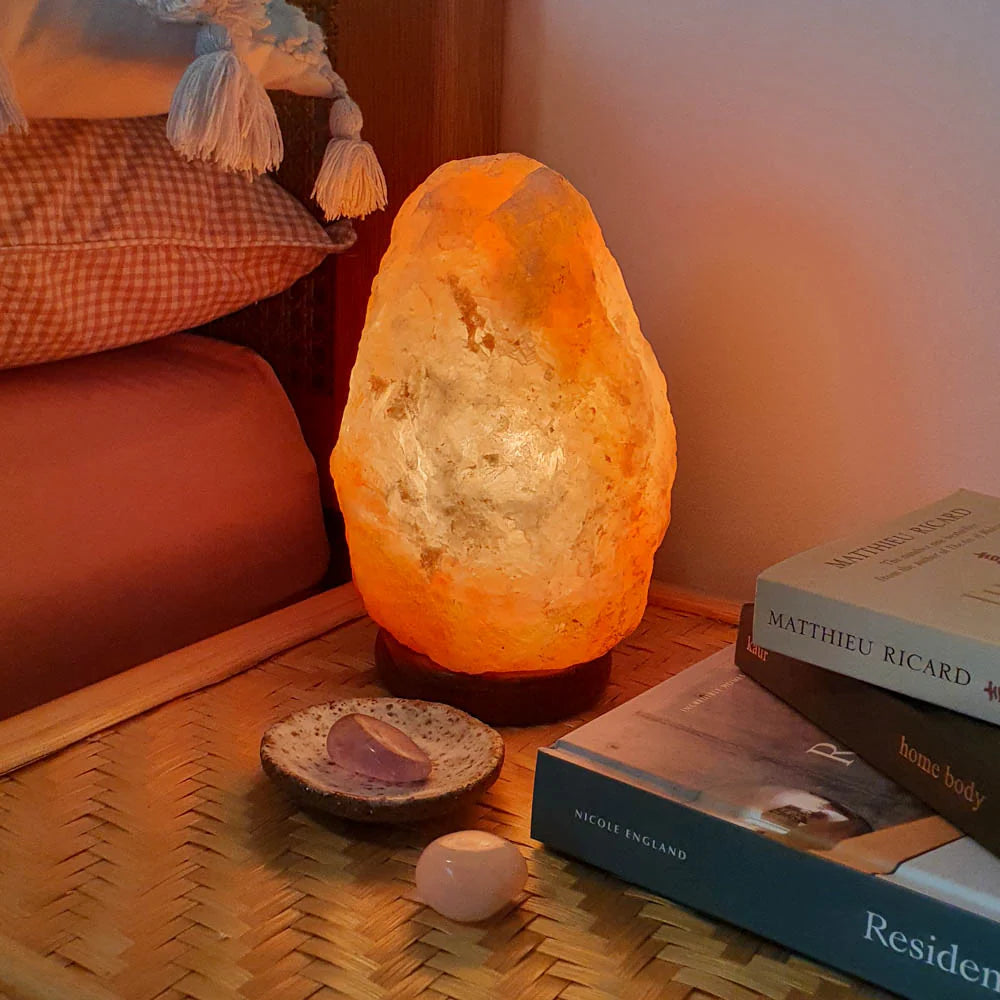


What is a carved salt lamp? Your complete guide
A carved salt lamp is a hand-shaped block of Himalayan rock salt with a light source fitted inside, designed to produce warm, amber-toned illumination with a natural, organic appearance. These lamps originate from ancient salt deposits in the Khewra Salt Mine in Pakistan, one of the largest and oldest salt mines in the world. Millions of homes across the UK use them as decorative accent pieces, drawn by their warm amber glow and the popular perception of wellness benefits. The reality of those health claims, however, is more nuanced than most product descriptions suggest.
What is a carved salt lamp and how is it made?
A carved salt lamp is a block of Himalayan rock salt that has been manually shaped and hollowed to house a bulb or candle holder. The salt itself comes from the Khewra mines in the Punjab region of Pakistan, where ancient seabeds left behind mineral-rich deposits over 500 million years ago. The characteristic pink, orange, and red colouration comes from trace minerals including iron oxide, magnesium, and potassium present in the salt.

The production process begins with miners extracting large blocks of raw salt. Artisans then use hand tools and manual carving techniques to shape these blocks, hollowing out a central chamber to fit an electrical fitting and bulb. The surface may be left rough for a natural texture or polished smooth for a more refined finish. This handmade process means no two lamps are identical in shape, colour, or translucency.
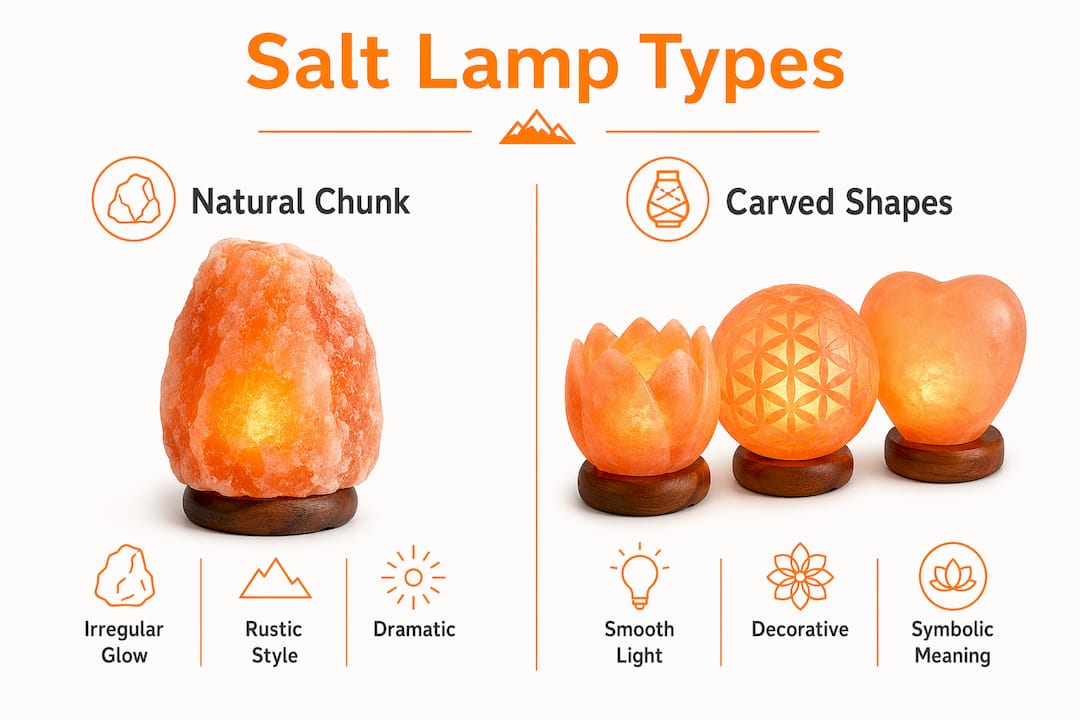
Carved salt lamps come in a wide range of forms. The most common varieties include:
- Natural chunk lamps: Irregular, unpolished blocks that retain the raw appearance of mined salt
- Geometric shapes: Spheres, pyramids, and cylinders carved for a more structured look
- Decorative sculptures: Hearts, flames, and animal forms popular as gifts and focal pieces
- Bowls and baskets: Hollowed containers filled with loose salt crystals and a central light source
The heart shape salt lamp and ball lamp are among the most popular carved forms in the UK market, offering both decorative appeal and a compact footprint. The carving style affects how light diffuses through the salt, creating either a solid glow or intricate surface patterns depending on the thickness of the walls.
Pro Tip: When choosing between a rough chunk and a polished carved lamp, remember that thinner walls allow more light to pass through, creating a brighter, more dramatic glow. Thicker walls produce a softer, more subdued ambience.
What are the claimed benefits of salt lamps, and what does science say?
The most frequently cited carved salt lamp benefits include air purification, negative ion release, improved sleep, and mood enhancement. These claims are widely repeated in wellness communities, but the scientific evidence behind them is limited and requires careful interpretation.
The air purification claim rests on two ideas. First, that salt’s hygroscopic nature draws moisture and airborne particles from the room. Second, that the heat from the bulb releases negative ions that neutralise pollutants. In practice, salt lamps generate minimal ions compared with dedicated air purifiers, and their surface area is far too small to meaningfully reduce contaminants in a standard room. A mechanical HEPA air purifier from brands such as Dyson or Blueair will outperform a salt lamp on air quality by a significant margin.
“The wellness benefits most consistently reported by salt lamp users align with the effects of warm, dim ambient lighting rather than any chemical or ionic process.” — Rosewood Market
The mood and sleep benefits are more credible, but for a different reason than most people assume. Warm amber light in the 2,000 to 2,700 Kelvin range suppresses blue light exposure in the evening, which supports the body’s natural melatonin production. Salt lamps produce light in exactly this range. So the soothing amber glow genuinely can support relaxation and better sleep, just not through negative ions or air chemistry.
Here is a clear breakdown of what the evidence actually supports:
- Warm ambient lighting: Consistently supported. Reduces blue light exposure and promotes relaxation.
- Mood improvement: Plausible, attributed to soft lighting rather than ionic effects.
- Air purification: Not supported at meaningful levels by current scientific evidence.
- Negative ion therapy: Theoretically possible but practically negligible from a standard salt lamp.
- Humidity reduction: Marginal at best. Salt absorbs moisture but does not dehumidify a room.
Wellness myths persist around salt lamps largely because the relaxation effect is real and noticeable. Users feel better, and they attribute it to the lamp rather than to the quality of the light itself. Setting realistic expectations means you can genuinely enjoy what these lamps do well without being disappointed by what they cannot do.
How to care for and safely use a carved salt lamp
Salt is hygroscopic, meaning it actively absorbs moisture from the surrounding air. This is the single most important practical fact about owning a carved salt lamp. In humid conditions or rooms with poor airflow, the lamp surface will become damp and may leave a salty residue on surfaces beneath it. This is normal behaviour, not a defect.
Follow these steps to keep your lamp in good condition and use it safely:
- Place it on a protective mat or tray. Salt residue and moisture can damage wooden furniture, so always use a waterproof base beneath the lamp.
- Keep it in a dry room. Bedrooms, living rooms, and offices are ideal. Avoid bathrooms, kitchens, and conservatories where humidity is consistently high.
- Leave it switched on regularly. The heat from the bulb evaporates absorbed moisture and keeps the surface dry. Lamps left off for long periods in humid rooms will sweat more heavily.
- Use the correct bulb wattage. The electrical component quality directly affects both safety and performance. Use only the wattage specified by the manufacturer, typically 15W for smaller lamps and up to 40W for larger pieces.
- Check the cord and fitting regularly. Cheaper imported lamps sometimes use uncertified wiring. Look for lamps with BS-approved plugs and UL or CE-certified fittings when buying in the UK.
Pro Tip: If your lamp has been switched off for several days and feels very damp, place it outside in sunlight for an hour before switching it back on. This removes excess moisture without the risk of electrical issues from a wet fitting.
Cleaning is straightforward. Use a slightly damp cloth to wipe the surface, then dry it immediately. Never submerge a salt lamp in water or leave it in a wet environment. Placement in dry, airy rooms is the single most effective way to prevent moisture problems and extend the lamp’s lifespan.
How do carved salt lamps enhance home decor and ambience?
Carved salt lamps offer something that mass-produced lighting cannot replicate: a genuinely unique, organic light source where no two pieces look the same. The carving shapes light diffusion in ways that vary with the thickness of the salt walls, the depth of the carving, and the mineral composition of the individual block. A heart-shaped lamp casts soft, rounded light patterns. A ball lamp produces an even, omnidirectional glow. A rough natural chunk creates an irregular, cave-like warmth.
| Lamp style | Light effect | Best room setting |
|---|---|---|
| Natural chunk | Irregular, dramatic glow | Rustic living rooms, reading nooks |
| Heart or flame shape | Soft, directional light | Bedrooms, meditation spaces |
| Ball lamp | Even, omnidirectional glow | Offices, yoga studios |
| Bowl with crystals | Diffused, layered warmth | Spa-style bathrooms (with care) |
The warm colour temperature of salt lamps makes them particularly effective as evening accent lighting. Placed on a bedside table, bookshelf, or side table, they reduce the harshness of overhead lighting without plunging a room into darkness. Interior designers increasingly use them in spa-inspired bathrooms, meditation corners, and cosy reading areas where the goal is atmosphere rather than task lighting.
Carved shapes also carry symbolic weight for many buyers. A lotus flower or heart shape can anchor a wellness corner or meditation space, adding visual meaning alongside the practical light. The crafted salt lamp range from Thehimalayansalt includes multiple shapes and sizes, making it straightforward to find a piece that fits a specific room’s aesthetic.
The natural colour variation in Himalayan salt, from pale pink to deep terracotta, means these lamps complement a wide range of interior styles. They work particularly well in warm-toned rooms with natural materials such as wood, linen, and stone.
Key takeaways
Carved salt lamps deliver genuine value as ambient lighting and decorative pieces, but their wellness benefits come primarily from warm light rather than ionic or air-purifying chemistry.
| Point | Details |
|---|---|
| Core definition | A carved salt lamp is a hand-shaped Himalayan salt block with a fitted light source inside. |
| Primary benefit | Warm amber light reduces blue light exposure, supporting relaxation and better sleep. |
| Science on air purification | Salt lamps generate negligible ions and cannot meaningfully purify room air. |
| Key care rule | Keep lamps in dry rooms and leave them switched on to prevent moisture build-up. |
| Safety priority | Always use lamps with certified electrical components and the correct bulb wattage. |
Why I think most people buy salt lamps for the right reasons, just the wrong story
Most buyers are not actually wrong about salt lamps. They buy them because the warm glow genuinely makes a room feel calmer and more pleasant. That is a real, measurable effect of warm-spectrum ambient lighting, and it is worth paying for. The problem is that the marketing story around negative ions and air purification sets up expectations the lamp cannot meet.
What I find genuinely impressive about a well-made carved lamp is the craftsmanship. Each piece from a reputable supplier like Thehimalayansalt is hand-shaped from authentic Khewra salt, and the variation in colour and translucency makes every lamp a one-off object. That is rare in home decor at this price point.
My practical advice: buy a carved salt lamp for the light and the look. Place it in a dry room, use a quality bulb, and leave it on in the evenings. You will get a genuinely pleasant atmosphere and a decorative piece that ages well. Do not buy it expecting it to replace an air purifier or solve a sleep disorder. Treat it as what it is: a beautiful, functional light source with a natural character that no factory-made lamp can replicate.
— asad
Explore Thehimalayansalt’s carved salt lamp collection
Ready to add a genuine Himalayan salt lamp to your home? Thehimalayansalt offers a hand-picked selection of authentic carved lamps, sourced directly from Khewra salt and crafted by skilled artisans. Every lamp comes with certified UK-standard electrical components, so you get both quality and peace of mind.
Whether you want a statement piece or a compact bedside lamp, the range covers multiple sizes and shapes. The large Himalayan salt lamp at 22 to 26 kg makes a bold focal point in living rooms, while the grey salt lamp at 3 to 5 kg suits smaller spaces with a cooler, more understated tone. Free shipping across the UK is included on all orders. Shop the full crafted salt lamp collection and find the right piece for your space today.
FAQ
What is a carved salt lamp made from?
A carved salt lamp is made from Himalayan rock salt extracted from the Khewra Salt Mine in Pakistan. Artisans hand-shape and hollow the salt block to fit an electrical bulb fitting inside.
Are salt lamps safe to use at home?
Salt lamps are safe when used correctly. Always use the recommended bulb wattage, place the lamp on a stable, waterproof surface, and choose lamps with certified electrical components to avoid fire or electrical risks.
What do salt lamps actually do?
Salt lamps produce warm, amber-toned light in the 2,000 to 2,700 Kelvin range. This reduces blue light exposure in the evening, which can support relaxation and better sleep, though air purification claims are not strongly supported by science.
Why does my salt lamp sweat or feel damp?
Salt is hygroscopic and naturally absorbs moisture from the air. Leaving the lamp switched on regularly allows the bulb’s heat to evaporate this moisture. Placing the lamp in a dry room also significantly reduces sweating.
What size carved salt lamp should I buy?
Smaller lamps of 1 to 3 kg suit bedside tables and desks. Larger lamps of 5 kg and above work better as room focal points in living rooms or open-plan spaces. The ball salt lamp at 4 kg is a popular mid-size option for versatile placement.