

Real vs Fake Himalayan Salt Lamp: How to Tell the Difference

A genuine Himalayan salt lamp is a block of natural rock salt, hand-carved, mined mostly from the Khewra Salt Mine in Pakistan, with a bulb sitting inside it. Knowing how to spot a real one matters because the market is thick with plastic replicas, dyed fakes and badly wired products that carry actual safety risks. One thing to clear up before anything else: no salt lamp genuinely purifies the air, so an "air purifying" label tells you nothing about whether a lamp is real. What follows is what actually proves it: colour, weight, surface, how it behaves in humidity, the electrics, and how straight the seller is with you.
What Visual and Physical Features Identify a Genuine Salt Lamp?
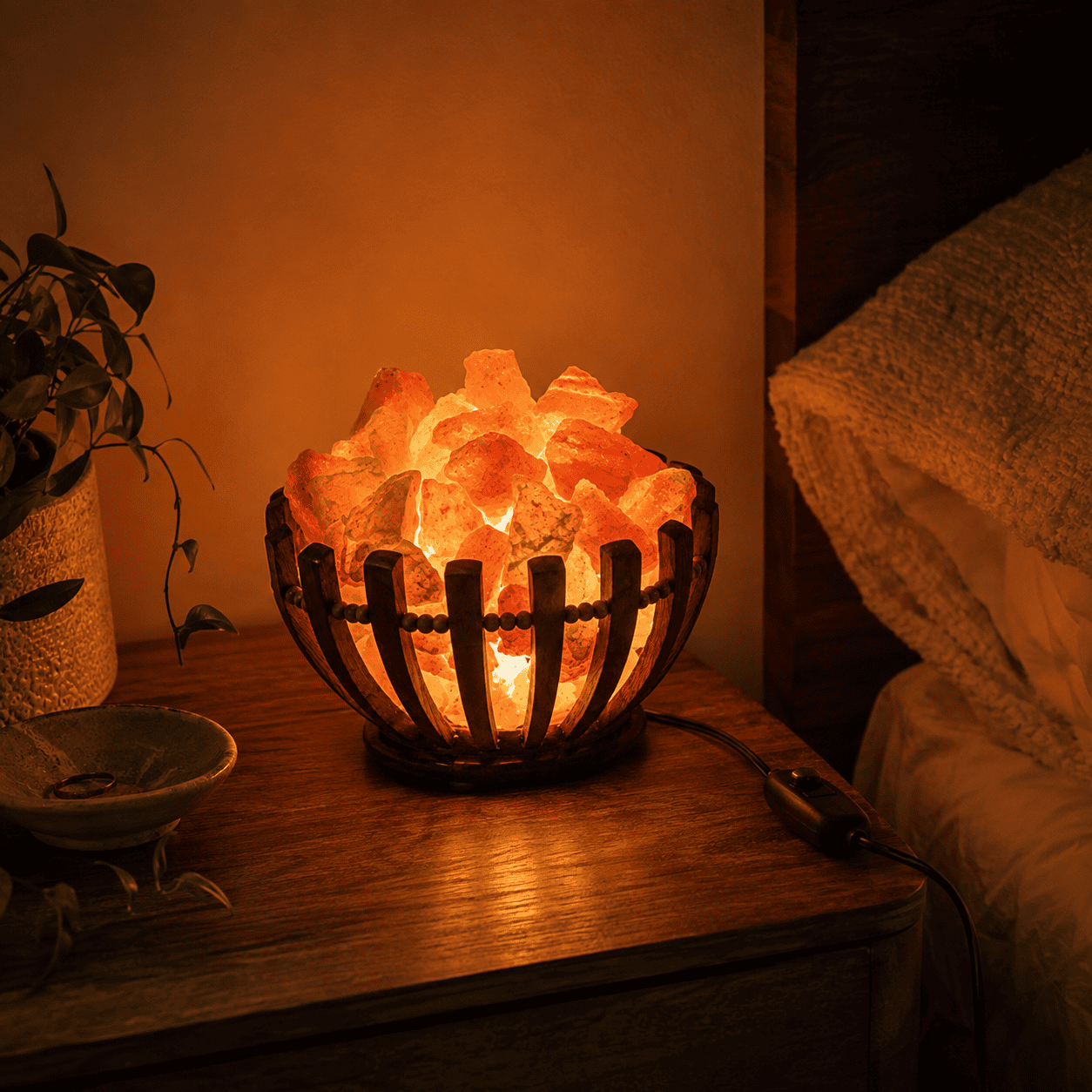
A real lamp shows natural pink and orange tones, uneven translucency, and a muted, warm glow. That unevenness is the whole point. Rock salt forms over millions of years with the minerals scattered unevenly, so no two genuine lamps look the same. A bright, uniform neon pink usually means dyed resin or plastic, which is why every one of the hand-carved natural salt lamps we stock reads a little differently in the same window light.
- Colour and translucency: genuine Himalayan salt runs from pale peach through pink to deep amber and red. Hold it to a light and real salt passes that light unevenly, darker patches next to lighter veins.
- Authentic lamps feel slightly rough and irregular under your hand, whereas a perfectly smooth, symmetrical surface points to moulded resin.
- Weight: rock salt is dense. A genuine 3 to 5 kg lamp feels heavy for its size. If it feels light, question the material.
- Glow warmth: the light should read warm amber to soft peach, never vivid neon pink or bright white.
- Small chips, minor flaws and a little salt residue near the fitting all say real rock salt. A flawless finish is the suspicious one.
Origin: The Khewra Marker of Authenticity
Genuine Himalayan salt comes from the Khewra Salt Mine in Pakistan, and it's roughly 96 to 98% sodium chloride with a small fraction of trace minerals doing the colouring. A seller worth trusting states the Pakistani, ideally Khewra, origin plainly. Vague wording like "natural mineral salt" with no geography behind it is a warning sign, and so is any listing that leans on marketing language instead of specifics. If you're weighing up two honest options rather than dodging a fake, our guide to natural versus polished salt lamps covers which finish suits which room.
Why Electrical Safety and Product Transparency Matter
A salt lamp is an electrical appliance wrapped around a body that pulls in moisture, so the wiring matters more than people expect. A badly wired lamp near a humid room, or left running unattended, can overheat. Certified components with recognised safety marks are the floor, not a bonus. In the UK, look for a CE or UKCA mark on the plug and fitting. Things to walk away from:
- Cords that feel thin, stiff or poorly insulated.
- Plugs with no safety certification markings.
- Dimmer switches that get noticeably hot in use.
- No mention of bulb wattage or socket type anywhere in the listing.
- Vague marketing with no origin details for the salt.
A retailer worth buying from states the salt source, gives you specifications, has a clear returns policy and stands behind the product. Once it's home, keep it off carpets and soft furnishings, stick to the recommended wattage, and unplug it if the cord ever feels warm.
How to Test Authenticity at Home
A few safe, non-destructive checks will settle it. None of them need special kit.
- Passive moisture test: leave the lamp in a moderately humid room for 24 hours. A genuine one picks up slight dampness or a faint salt residue, because real salt pulls moisture from the air. That sweating is a good sign.
- Never wet it deliberately: adding water dissolves the surface and can create an electrical hazard. Watching it passively is enough.
- Weight check: put the lamp against the seller's stated weight. Lighter than claimed suggests hollow or non-salt construction.
- Glow check: switch it on in a dark room. Real salt throws a warm, uneven amber glow. Flat, even, bright light points to synthetic material.
- Residue check: after an hour lit, wipe a clean white cloth lightly over the surface. A faint pink or white salt deposit is a positive sign.
Persistent dampness or a little pooling at the base is almost always a placement problem in a humid room, not a fault. We get emails about this every autumn when the damp sets in. Move it somewhere drier, keep it switched on, and it settles.
The Truth About “Air Purifying” Claims
Plenty of listings sell salt lamps as air purifiers, and this is exactly where an honest shop has to hold the line: there's no credible evidence that salt lamps clean air in any measurable way. Because of that, "air purifying" proves nothing about whether a lamp is the real thing.
The mechanism people cite is negative-ion output. A heated salt lamp releases only a negligible number of ions, nowhere near enough to shift air quality, and independent testing shows no meaningful drop in particulate matter or VOCs. The bulbs, at roughly 15 to 25 watts, are simply too weak to do it.
| Common claim | Reality |
|---|---|
| Salt lamps generate useful negative ions | Output is negligible, far below any air-cleaning threshold |
| Salt lamps reduce dust and allergens in a room | No credible evidence supports this |
| Salt lamps absorb moisture from the air | True. This is hygroscopy, not air filtration |
| Salt lamps can replace an air purifier | No. A certified HEPA filter is the evidence-based choice |
The moisture-pulling effect is real, and dust does stick to a damp surface, but that's the lamp cleaning itself, not the room. If you want measurable air quality gains, run a certified HEPA purifier. A salt lamp is a decorative light, not a medical device, and the full science behind the myth is laid out in our guide to whether salt lamps really purify air.
Best Practices for Buying an Authentic Salt Lamp
- Check the seller's reputation, and look for reviews that mention weight, glow quality and packaging rather than just how it looks in a photo.
- Demand origin transparency: the seller should say the salt is from Pakistan, ideally Khewra.
- Confirm electrical certification: UK buyers want a CE or UKCA mark on the plug and fitting.
- A confident seller gives you a clear return window, so read the returns policy before you buy.
- Prefer UK-based or verified sellers: UK retailers sit under consumer protection rules that give you somewhere to go if it goes wrong.
Frequently Asked Questions
What does a genuine salt lamp look like?
Uneven pink to amber colour, a slightly rough surface, a warm and muted glow. Bright neon pink or perfectly even light means synthetic or dyed.
Can a salt lamp really purify the air?
No, and no honest test of authenticity rests on it. There's no credible evidence salt lamps clean air or release useful negative ions. They're decorative lights, so judge a real one by its salt, weight and wiring, not by an air-purifying label.
How heavy should a genuine salt lamp be?
Dense for its size. A 3 to 5 kg lamp feels substantial in the hands, and one that feels light against its stated weight is probably hollow or not real salt.
Is slight dampness on my salt lamp normal?
Yes. Real salt draws moisture in humid conditions, so a little surface dampness is expected and actually confirms it's genuine. Don't ever wet it on purpose, and shift it somewhere drier if it starts pooling.
Shop Genuine Himalayan Salt Lamps
We sell handmade, genuine salt lamps sourced from Pakistan, wired with certified components. For a sculpted finish rather than a raw block, the crafted salt lamps are worth a look, or step back for the wider picture in our ultimate guide to salt lamp benefits, types and home integration.