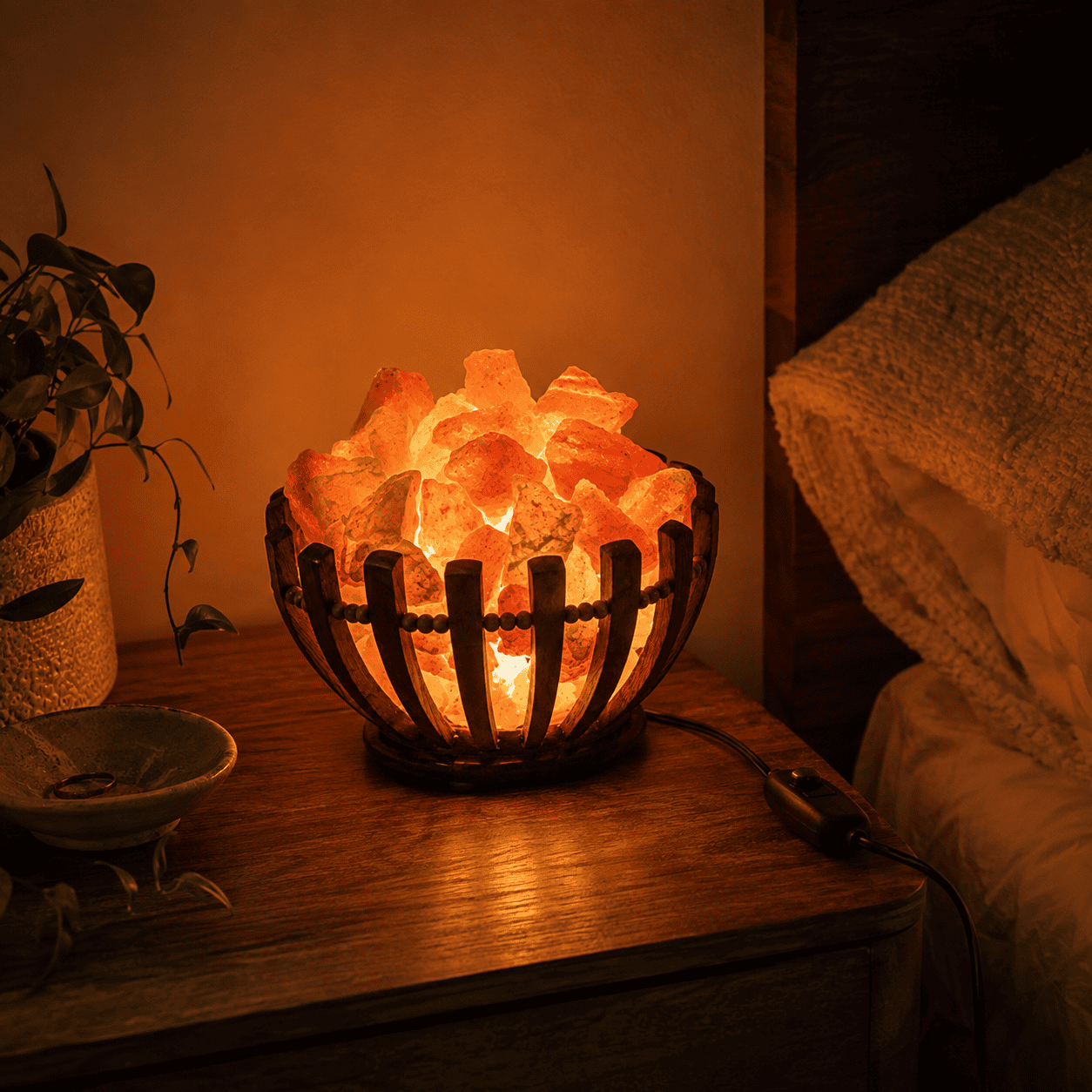
Himalayan salt nightlight explained: benefits and facts
A Himalayan salt nightlight is a decorative lamp carved from natural pink Himalayan salt crystal that emits a warm amber glow, designed to support relaxation and improve your evening wind-down routine. These lamps are sold widely across the UK as wellness products, often with claims about air purification, negative ion emission, and allergy relief. Some of those claims hold up. Many do not. This article gives you the full picture: what these lamps actually do, what the science says, how to spot a genuine product, and how to get the most from one in your home.
How Himalayan salt nightlights work
A Himalayan salt nightlight functions through a simple physical process. A small bulb sits inside a hollowed block of natural salt crystal mined from the Khewra Salt Mine in Pakistan, the world’s second-largest salt mine. The bulb heats the salt, which glows with a soft amber or orange light in the 2,000 to 3,000 Kelvin range. That warm colour temperature is close to candlelight and significantly lower in blue-spectrum output than standard LED or fluorescent bulbs.
The salt itself is hygroscopic, meaning it naturally attracts moisture from the surrounding air. In humid conditions, you may notice the lamp surface feels slightly damp or even drips. This is normal. Turning the lamp on regularly heats the crystal and evaporates that absorbed moisture, keeping the lamp dry and extending its lifespan.

The most widely marketed claim is that these lamps release negative ions that purify the air. Scientific testing tells a different story. Salt lamps produce ion concentrations many times lower than natural outdoor environments or dedicated ioniser devices, making clinical air-purification benefits highly unlikely. Independent air quality testing confirms that PM2.5 and VOC removal from salt lamps is effectively zero. These are ambient lighting products, not air filtration systems.
Pro Tip: If you want genuine air purification alongside your salt lamp, pair it with a HEPA-filter air purifier such as a Dyson or Blueair unit. Use the lamp for atmosphere; use the purifier for air quality.
| Feature | What it actually does |
|---|---|
| Warm amber glow | Reduces blue-light exposure in the evening, supporting melatonin production |
| Hygroscopic salt crystal | Absorbs surface moisture from the air; does not purify pollutants |
| Heated bulb | Evaporates absorbed moisture and maintains lamp condition |
| Negative ion emission | Output is negligible compared to outdoor air or ioniser devices |
What are the real health benefits of salt lamps?
The wellness case for Himalayan salt nightlights is real, but it rests on psychology and lighting science rather than chemistry. Around 80% of salt lamp owners report increased relaxation and reduced anxiety during their nighttime routines. That figure is striking, even if the mechanism is not what most buyers expect.

The primary benefit is light quality. Warm light used one to three hours before bed reduces melatonin suppression compared to the blue-spectrum light emitted by phones, laptops, and overhead LEDs. Switching to a salt lamp in the evening is a practical, low-cost way to shift your lighting environment in favour of sleep. The amber glow signals to your brain that the day is ending.
There is also a psychological benefit tied to ritual. Soft, warm lighting conditions the brain to associate a specific environment with relaxation, which supports faster sleep onset over time. This is the same principle behind sleep hygiene practices recommended by sleep clinicians at organisations such as the Sleep Foundation and the NHS. The lamp becomes a cue, not a cure.
Here is a clear summary of what the evidence supports and what it does not:
- Supported: Reduced blue-light exposure in the evening
- Supported: Psychological relaxation through ritual and warm ambient light
- Supported: Aesthetic improvement to bedroom or living space
- Not supported: Air purification or reduction of airborne pollutants
- Not supported: Meaningful negative ion release at typical indoor distances
- Not supported: Allergy relief or respiratory improvement through ion emission
- Inconclusive: Mood improvement through serotonin pathways (animal studies show increased brain tryptophan after prolonged exposure, but these findings do not translate directly to human use at normal lamp distances)
“Experts advise combining salt lamps with verified air filtration technologies for respiratory health, while using lamps purely for decoration and relaxation.” — Do salt lamps purify air?
The distinction matters. If you buy a salt lamp expecting it to clear allergens from your bedroom, you will be disappointed. If you buy one to create a calmer, warmer atmosphere for your evening routine, it will almost certainly deliver.
How to spot a genuine Himalayan salt nightlight
The market for salt lamps includes a significant number of synthetic or dyed imitations. Knowing what to look for protects your investment and your experience. Authentic lamps have a distinctive look and feel that fakes cannot fully replicate.
Genuine Himalayan salt shows natural pink and orange veining throughout the crystal, with slight colour variation and imperfections. Fakes tend to have uniform, artificially vivid colour. A simple taste test is also reliable: real salt tastes clean and salty with no chemical or plastic aftertaste. If the surface tastes odd, the material is likely synthetic or heavily processed.
Check the base. Lamps with wooden bases are more stable and durable than those with plastic bases, which can crack or warp under the heat of the bulb. A well-made lamp will also use an incandescent or low-wattage bulb rather than an LED, since LEDs do not generate enough heat to warm the crystal properly or produce the characteristic amber glow.
Pro Tip: Always check that the product lists Pakistan or the Khewra Salt Mine as the source. Lamps labelled vaguely as “Himalayan” without a country of origin are a red flag. Thehimalayansalt sources directly from verified Pakistani suppliers and provides origin information with every product.
| Feature | Authentic lamp | Imitation lamp |
|---|---|---|
| Colour | Natural pink/orange with visible veining | Uniform, artificially bright colour |
| Taste | Clean, salty, no aftertaste | Chemical or plastic taste |
| Base material | Solid wood | Plastic or thin MDF |
| Bulb type | Incandescent or low-wattage | LED (insufficient heat output) |
| Origin label | Pakistan / Khewra Salt Mine | Vague or absent |
You can find a full guide to spotting authentic lamps on the Thehimalayansalt website, which covers additional tests including the weight-to-size ratio and the scratch test.
How to use, care for, and place your salt lamp
Getting the most from a Himalayan salt nightlight comes down to placement, routine, and basic maintenance. Follow these steps to keep your lamp performing well and your evenings genuinely calmer.
- Place the lamp on a stable, elevated surface away from bathrooms, kitchens, or any area with high humidity. Salt absorbs moisture aggressively, and persistent dampness will cause the lamp to weep and degrade faster.
- Keep the lamp switched on for at least four to six hours daily. The heat from the bulb evaporates absorbed moisture and prevents dripping. If you notice the surface is wet, simply leave the lamp on until it dries. A full humidity management routine is worth reading if you live in a particularly damp climate.
- Use a dimmable plug or a USB salt lamp variant if you want flexible brightness control. A USB option is particularly useful for desks or travel. You can read more about USB salt lamp options if portability matters to you.
- Keep the lamp out of reach of children and pets. Salt lamps carry low risk when used correctly, but the fragile crystal and electrical components pose hazards if knocked over or chewed.
- Wipe the surface monthly with a slightly damp cloth, then immediately switch the lamp on to dry it. Do not use cleaning sprays or submerge the lamp in water.
- Incorporate the lamp into a pre-sleep ritual. Switch it on 60 to 90 minutes before bed, dim other lights in the room, and avoid screens. The consistent warm-light environment conditions your brain to associate the glow with winding down, which is the most evidence-backed benefit these lamps offer.
Key takeaways
Himalayan salt nightlights deliver genuine relaxation benefits through warm amber light and ritual use, not through air purification or ion emission.
| Point | Details |
|---|---|
| Warm light is the core benefit | Amber glow at 2,000 to 3,000 K reduces blue-light exposure and supports melatonin production before sleep. |
| Air purification claims are unsupported | Scientific testing shows effectively zero reduction in PM2.5 or VOCs from salt lamp use. |
| Authenticity matters | Genuine lamps show natural veining, taste clean and salty, and use wooden bases with incandescent bulbs. |
| Humidity management is required | Keep the lamp on daily to evaporate absorbed moisture and prevent surface dripping. |
| Ritual amplifies the benefit | Consistent evening use conditions the brain to associate the lamp’s glow with relaxation and sleep onset. |
Why I think most people misunderstand these lamps
People tend to buy Himalayan salt nightlights for the wrong reasons and then either love them or feel cheated. The ones who feel cheated usually bought into the air purification story. The ones who love them discovered something quieter: that a warm, amber-lit room at 9pm genuinely changes how you feel.
I have seen this pattern repeatedly. The science on ion emission is clear. These lamps do not clean your air in any meaningful way. But the science on warm light and sleep hygiene is equally clear, and that is where the real value sits. A lamp that shifts your evening environment away from harsh overhead lighting and screen glare is doing something useful, even if it is not what the marketing promised.
My honest advice: buy a genuine lamp from a trusted source, use it as part of a consistent wind-down routine, and do not expect it to replace a HEPA filter or a medical treatment. The handmade quality of a well-sourced salt lamp also adds something to a room that a plastic diffuser simply cannot match. That aesthetic value is real and worth paying for. Just keep your expectations grounded in what the product actually is: a beautiful, calming light source.
— asad
Find authentic Himalayan salt nightlights from Thehimalayansalt

Thehimalayansalt stocks a full range of genuine, handcrafted salt lamps sourced directly from Pakistan, with free shipping across the UK. Whether you want a compact bedroom nightlight or a larger statement piece for your living room, the collection covers multiple sizes, shapes, and bases. Every lamp comes with clear origin labelling so you know exactly what you are buying.
Browse the natural salt lamps collection for the full range, or go straight to the popular 9 to 12 kg lamp if you want a lamp that balances brightness with practicality for everyday nightlight use. Genuine products, real origins, and a straightforward shopping experience.
FAQ
What does a Himalayan salt nightlight actually do?
A Himalayan salt nightlight emits a warm amber glow that reduces blue-light exposure in the evening, supporting relaxation and melatonin production before sleep. Its primary benefit is atmospheric and psychological rather than chemical or medical.
Do salt lamps purify the air?
No. Scientific testing confirms that salt lamps produce negligible ion concentrations and remove effectively zero PM2.5 pollutants or VOCs from indoor air. They function as ambient lighting, not air purifiers.
How do I know if my salt lamp is genuine?
Check for natural pink and orange veining, a clean salty taste with no chemical aftertaste, a solid wooden base, and a country of origin label confirming Pakistan or the Khewra Salt Mine. Uniform colour and plastic bases are signs of an imitation.
Is it safe to leave a salt lamp on overnight?
Most salt lamps are safe to leave on for extended periods, but check the manufacturer’s guidance for your specific product. Keep the lamp on a stable, non-flammable surface and away from children and pets to avoid electrical or fragility hazards.
Why does my salt lamp sweat or drip?
Salt is hygroscopic and absorbs moisture from humid air. Leaving the lamp on for several hours heats the crystal and evaporates the absorbed moisture. If sweating persists, move the lamp to a drier location away from kitchens or bathrooms.