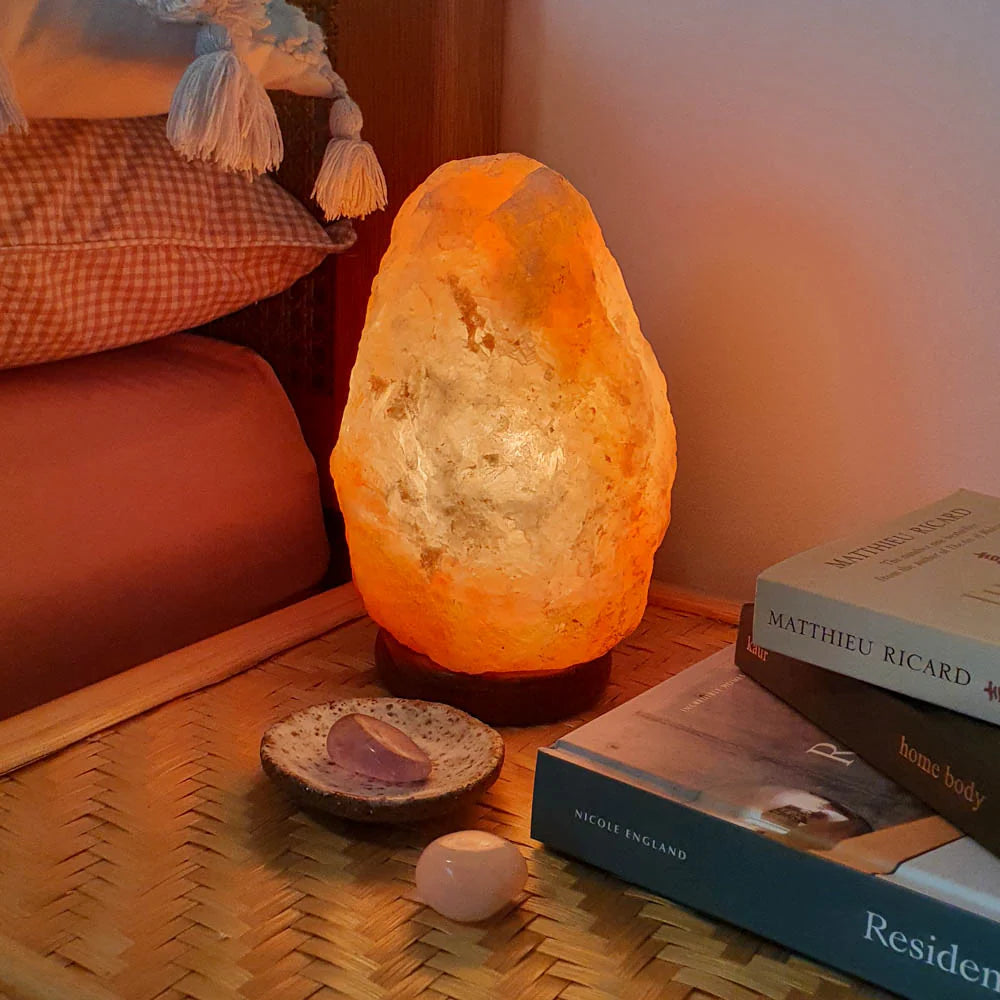


Why each salt lamp is a unique piece: the full guide
A Himalayan salt lamp is defined as a decorative light carved from a single block of natural rock salt, mined primarily from the Khewra Salt Mine in Pakistan. No two lamps share the same shape, colour, or mineral pattern. That is precisely why each salt lamp is a unique piece, and why collectors and wellness enthusiasts treat them as natural art rather than mass-produced goods. Understanding what drives that individuality, from geology to artisan carving, also clarifies which benefits of salt lamps are real and which are overstated.
Why is each salt lamp a unique piece?
Every lamp starts as a raw block of ancient rock salt, formed over millions of years under immense geological pressure. The mineral impurities locked inside that block, chiefly iron oxide, determine its colour. Pink colour from iron oxide produces shades ranging from pale blush to deep burnt orange, and no two blocks carry identical mineral concentrations. That variation alone guarantees colour individuality before a single tool touches the stone.
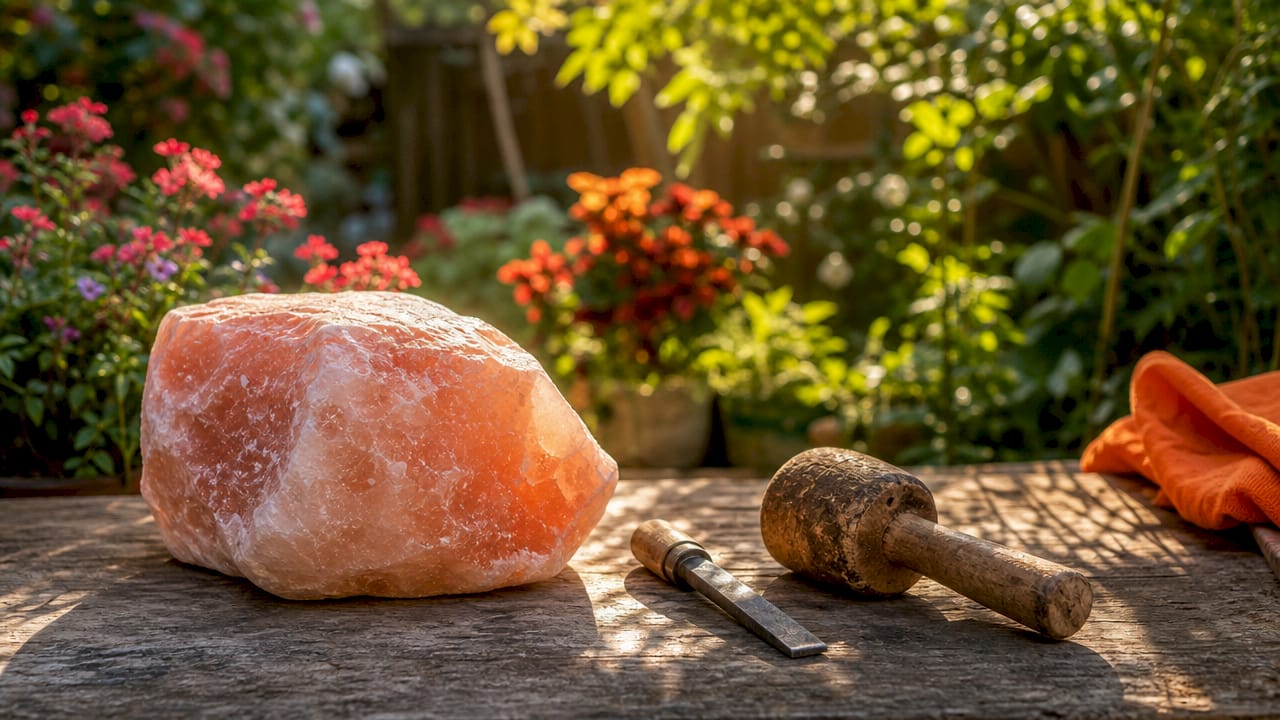
The crystal structure adds another layer of difference. Salt crystals grow in irregular lattices, producing veins, fractures, and density shifts that are entirely unpredictable. An artisan reading those natural lines will carve differently every time, following the rock rather than imposing a template. Artisans carve each lamp by hand, using the block’s own fractures to guide the final shape. No moulds are used.
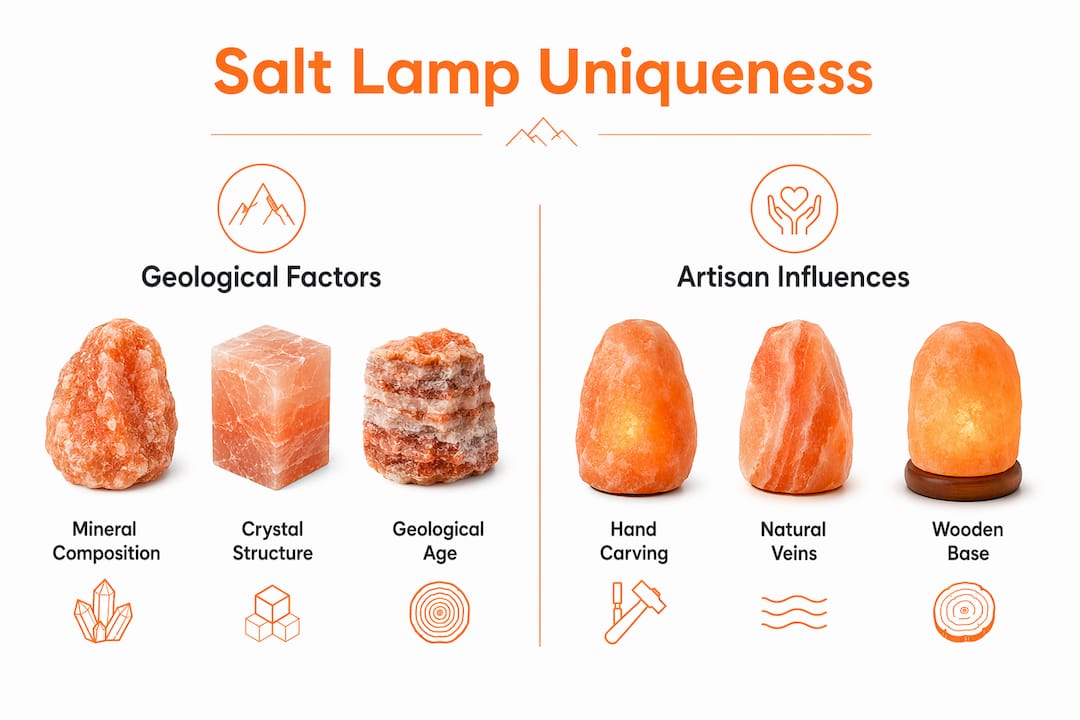
The distinctive salt lamp qualities you see on a shelf are therefore the product of three converging forces: geological age, mineral chemistry, and human craft. Change any one of those, and you get a different lamp. That is not marketing language. It is simply how the material works.
What to look for in a genuinely unique lamp
Authentic lamps carry specific visual markers that separate them from synthetic imitations:
- Uneven surface texture. Real salt has a coarse, rough finish. Smooth, uniform lamps are a strong indicator of artificial or inferior material.
- Colour variation within a single piece. Genuine rock salt shows lighter and darker zones within the same block, not a flat, consistent hue.
- Weight relative to size. Authentic salt is dense. A lamp that feels light for its size warrants scrutiny.
- Slight moisture response. Real salt absorbs ambient humidity. A lamp that never sweats in a damp room may not be genuine.
Pro Tip: Buy from suppliers who state the lamp’s origin as the Khewra Salt Mine and include a natural wooden base. Lamps sold with a fitted bulb holder and correct wattage bulb are more likely to come from producers who understand heat management.
How does the crystal structure create that warm, diffused glow?
The light a salt lamp produces is not simply the output of a small bulb. The irregular crystal lattice inside the salt block scatters and filters light in multiple directions simultaneously. Non-uniform crystal lattices reduce visual stress compared with the direct, flat output of standard LED or fluorescent fittings. The result is a soft, layered glow rather than a sharp beam.
The bulb itself matters. A 10–15W bulb produces 5–15 lux at a colour temperature of 1,800–2,200K. That range sits firmly in the warm amber zone, well below the blue-light frequencies that suppress melatonin. This makes salt lamps genuinely useful as melatonin-friendly lighting in bedrooms or reading spaces during the evening.
The table below compares the light characteristics of a typical Himalayan salt lamp against standard LED and fluorescent alternatives.
| Characteristic | Himalayan salt lamp | Standard LED | Fluorescent |
|---|---|---|---|
| Colour temperature | 1,800–2,200K | 2,700–6,500K | 3,000–6,500K |
| Lux output | 5–15 lux | 200–800 lux | 300–1,000 lux |
| Light diffusion | Non-uniform, organic | Uniform, directional | Uniform, diffuse |
| Blue light content | Very low | Moderate to high | Moderate to high |
| Visual stress effect | Reduced | Neutral to increased | Neutral to increased |
Pro Tip: Place your salt lamp on a bedside table and switch it on an hour before sleep. The low lux and warm colour temperature signal to your brain that the day is ending, supporting a natural wind-down.
What are the real health benefits of salt lamps?
The benefits of salt lamps split clearly into two categories: well-supported and overstated. Knowing the difference helps you get genuine value from your lamp rather than expecting it to do something it cannot.
Well-supported benefits:
- Sleep support. The warm amber light limits blue light exposure, which supports melatonin production and aids sleep onset. This is the most evidence-consistent benefit.
- Reduced eye strain. Warm ambient lighting mimics natural firelight, reducing the visual fatigue associated with harsh overhead lighting.
- Mood and calm. Chromotherapy research supports the idea that warm colours evoke calming emotional responses. A salt lamp contributes to that effect through its colour temperature alone.
- Routine anchoring. Visual cues from the lamp’s glow support calming habits like meditation, journalling, or reading. The lamp becomes a behavioural cue, not just a light source.
Overstated or unproven claims:
- Air purification. Salt does absorb moisture through hygroscopy, and ion release at typical lamp sizes is too small to produce measurable air quality changes. The mechanism is real; the scale is insufficient.
- Allergy or asthma relief. No clinical evidence supports meaningful respiratory benefit from a domestic salt lamp.
- Electromagnetic field reduction. No credible mechanism exists for this claim.
The honest framing is this: salt lamps work best as ambient anchors that support relaxing environments, not as medical devices. That framing is not a disappointment. A lamp that genuinely improves your sleep environment and reduces evening eye strain is already delivering real value.
How to choose and care for your salt lamp
Selecting and maintaining a genuine lamp is straightforward when you know what to check.
- Verify the texture. Run your hand across the surface. Authentic lamps have a coarse, uneven finish. Reject any lamp with a glassy or perfectly smooth surface.
- Check the drilling depth. The internal cavity must be deep enough to allow the bulb to heat the full block evenly. Too shallow a drill produces uneven warmth; too deep weakens the crystal structure and risks cracking.
- Match the bulb wattage. A 10–15W incandescent or halogen bulb is correct for most domestic lamps. LED bulbs do not generate sufficient heat to warm the salt block, which reduces both the glow quality and any hygroscopic effect.
- Position away from moisture. Salt is hygroscopic. Bathrooms, kitchens, and areas near open windows in wet weather will cause the lamp to weep and deteriorate. A dry living room or bedroom is ideal.
- Wipe, do not wash. Clean the surface with a slightly damp cloth, then dry immediately. Never submerge or rinse a salt lamp. The salt will dissolve.
- Choose a stable wooden base. A well-fitted base prevents rocking and protects surfaces from moisture seepage. Check that the base is wide enough relative to the lamp’s weight. You can read more about selecting the right lamp size for each room before you buy.
Key takeaways
Each Himalayan salt lamp is a genuinely unique natural object, shaped by mineral chemistry, geological age, and artisan carving, delivering real ambient and sleep benefits when used correctly.
| Point | Details |
|---|---|
| Natural mineral variation | Iron oxide and other trace minerals create colour differences from pale pink to deep orange in every lamp. |
| Handcrafted individuality | Artisans follow natural crystal fractures, so no two lamps share the same shape or surface pattern. |
| Genuine sleep benefit | A 10–15W bulb at 1,800–2,200K limits blue light and supports melatonin production in the evening. |
| Air purification is overstated | Ion release at domestic lamp sizes is too small for measurable air quality improvement. |
| Care determines longevity | Correct bulb wattage, dry placement, and gentle wiping preserve both appearance and function. |
Salt lamps as natural art: an honest view
I have handled a lot of salt lamps over the years, and the thing that consistently surprises people is how different two lamps from the same supplier can look side by side. One will be a deep amber with visible dark veining. The next will be almost translucent pink with a completely different surface character. That is not inconsistency. That is the material being honest about what it is.
What I find genuinely underappreciated is the craftsmanship involved. The drilling alone requires real skill. Get it wrong and the lamp cracks under heat within weeks. Get it right and you have a piece that will last years. Thehimalayansalt sources lamps where that drilling precision is taken seriously, and you can see it in how evenly the light distributes across the block.
My honest view on the health claims: the sleep and mood benefits are real and worth having. The air purification story is largely marketing. A lamp that helps you wind down in the evening and adds genuine warmth to a room is already doing its job. Expecting it to replace an air purifier or treat a medical condition sets you up for disappointment. Treat it as a piece of natural art that also happens to be a good bedside light, and it will exceed your expectations every time.
— asad
Authentic Himalayan salt lamps from Thehimalayansalt
Thehimalayansalt offers a range of handcrafted lamps in natural forms, each carved from genuine Khewra rock salt and fitted with a polished wooden base and correct bulb fitting. Sizes run from compact 3–5 kg pieces to statement lamps weighing over 20 kg, so there is a genuine option for every room.
Every lamp in the crafted salt lamps collection is sourced for natural colour variation and surface authenticity. If you want a lamp with distinctive grey mineral colouring, the Grey Himalayan Salt Lamp is a strong choice. For a larger statement piece, the 22–26 kg salt lamp delivers a room-filling warm glow. Free UK shipping is included on all orders.
FAQ
What makes each salt lamp different from the next?
Each lamp is carved from a unique block of natural rock salt with its own mineral composition, crystal structure, and surface texture. No two blocks are identical, so no two lamps look the same.
Are the health benefits of salt lamps scientifically proven?
The sleep and mood benefits from warm, low-lux amber light are well-supported. Air purification claims are not backed by clinical evidence at domestic lamp sizes.
How do I know if my salt lamp is genuine?
Authentic lamps have a coarse, uneven surface, show colour variation within the same block, and feel dense for their size. Smooth, uniformly coloured lamps are likely artificial or inferior quality.
What bulb should I use in a Himalayan salt lamp?
Use a 10–15W incandescent or halogen bulb. LED bulbs do not produce enough heat to warm the salt block, which reduces both the quality of the glow and the lamp’s hygroscopic function.
Why does my salt lamp sweat or drip water?
Salt is hygroscopic and absorbs moisture from the air. Sweating is normal in humid conditions. Keep the lamp switched on regularly, as the heat from the bulb evaporates absorbed moisture and prevents pooling.