

Types of Salt Therapy Treatments: Your Complete Guide

Salt therapy is a catch-all term for practices that involve breathing salty air or using salt dissolved in water. It covers dry methods, such as halotherapy salt rooms and handheld salt inhalers, and wet or brine methods, such as saline nasal rinses and salt baths. They're popular in spas and increasingly at home. Be clear from the start, though: the evidence behind most of them is limited and low quality. Some people report subjective, temporary relief or relaxation, but salt therapy isn't a proven medical treatment and shouldn't replace care for conditions like asthma or COPD. If you have a diagnosed condition, speak to your GP before trying anything below. If you're simply after the products themselves, our spa and massage range covers the home-friendly end of it.
What are the main types of salt therapy?
Broadly, salt therapy splits into dry methods, where you breathe air carrying fine salt particles, and wet or brine methods, where salt is dissolved in water and applied to the airways or skin. The mechanisms, and the strength of the evidence, differ a fair bit between them.
Halotherapy (dry salt rooms)
Halotherapy usually happens in a purpose-built room. A halogenerator grinds salt into a fine dry aerosol and disperses it into the air while you sit and breathe normally, typically for around 30 to 45 minutes. It's marketed for respiratory comfort and relaxation. The research base is small, mixed and generally low quality, so while some people describe easier breathing or feeling calmer afterwards, halotherapy isn't established as an effective medical treatment.
Speleotherapy (natural salt caves)
Speleotherapy means spending time in natural underground salt caves or old salt mines, where the air stays stable in temperature and humidity and carries some salt. It's a traditional practice in parts of Central and Eastern Europe. Man-made passive salt rooms, lined with salt blocks or lamps but without a halogenerator, try to recreate the atmosphere without producing a controlled salt aerosol. Either way the evidence is limited, and any benefit may owe as much to resting in a quiet, low-stimulation space as to the salt.
Salt inhalers and pipes
Salt inhalers, sometimes called salt pipes, are small handheld devices holding coarse salt crystals. You breathe in slowly through the mouthpiece so the incoming air passes over the salt. They're inexpensive and easy to use at home. As with the room-based methods, robust evidence is lacking, so they're best thought of as a low-cost thing some people find pleasant rather than a treatment with proven effects.
Wet and brine therapies
Wet methods dissolve salt in water. They include saline nasal rinses, salt baths and saline gargles. Of all the salt therapies, saline nasal rinsing has the strongest supporting evidence, which the section further down covers in more detail.
How do dry salt rooms compare with passive salt rooms?
A common point of confusion in spas is the difference between an active halotherapy room and a passive, decorative salt room. An active room uses a halogenerator to release a dry salt aerosol into the air. A passive room is lined with salt blocks, panels or lamps but has no halogenerator, so it doesn't generate a comparable aerosol. Both can feel calming, but only the active room is actually trying to put airborne salt into the air in any meaningful quantity.
| Feature | Active halotherapy room | Passive salt room |
|---|---|---|
| Halogenerator | Yes | No |
| Airborne salt aerosol | Yes, dispersed into the air | Minimal |
| Marketed for | Respiratory comfort, relaxation | Relaxation, atmosphere |
| Evidence quality | Limited and mixed | Very limited |
Booking a session with respiratory comfort in mind? It's reasonable to ask whether the room actually uses a halogenerator. Without one, you're paying for a quiet, atmospheric space to relax in, which has its own value but isn't the same as the treatment the marketing tends to imply.
What about wet and brine salt therapies?
Wet methods are where the evidence gets more reassuring, especially for the upper airways and skin.
Saline nasal rinses
Rinsing the nasal passages with a salt-water solution, using a neti pot, squeeze bottle or spray, is the best-evidenced salt therapy. It helps clear mucus and allergens and is widely recommended as a supportive measure for sinus congestion and hay fever. Safety matters here: use only sterile, distilled, or previously boiled and cooled water, never untreated tap water, because rare but serious infections have been linked to rinsing with contaminated water. Clean and dry the device thoroughly between uses, and follow the product instructions for the right salt concentration. Our guide to salt and sinus relief walks through the method step by step.
Salt baths
Dissolving salt in a warm bath is relaxing, and some people with dry or irritated skin find a soak soothing. The evidence is modest and the honest benefits are comfort and relaxation. If you have a skin condition such as eczema or psoriasis, check with a healthcare professional before adding salt soaks, because reactions vary from person to person.
Saline gargles
Gargling with warm salt water is a simple, cheap home remedy that many people find soothing for a sore or irritated throat. Evidence is limited, but it's inexpensive and low-risk for most adults.
Which salt therapies suit home use?
Several methods translate well to home use, as long as expectations stay realistic.
- Saline nasal rinses. The most accessible and best-evidenced option. Cheap, but use sterile, distilled or boiled-then-cooled water and clean the device carefully.
- Salt inhalers are handheld and easy to use for a few minutes at a time. Pleasant for some, though not proven to treat any condition.
- Salt baths. Simple and relaxing. Choose an additive-free salt if you want a plain soak.
- A saline gargle costs next to nothing: a glass of warm water and a little salt.
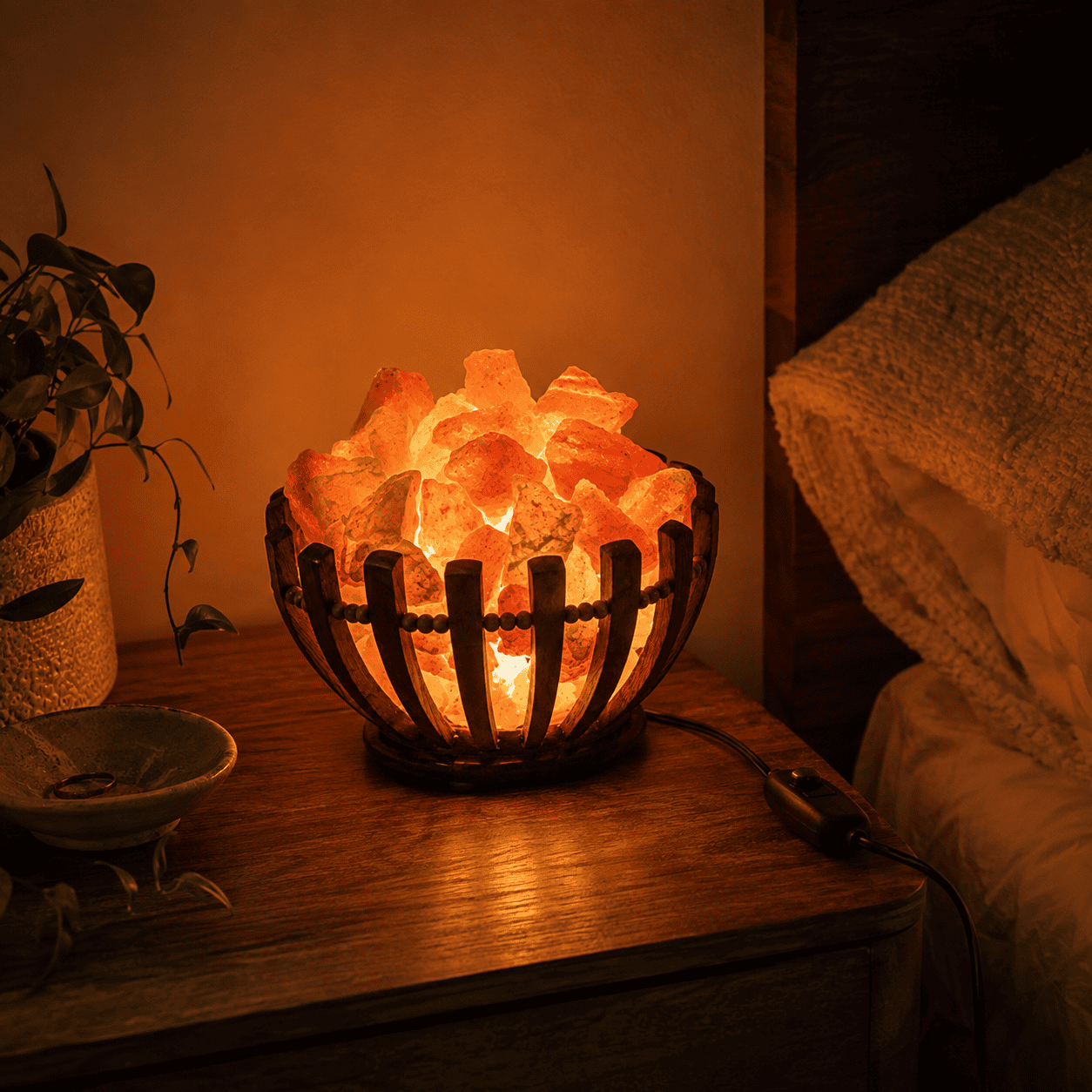
One frequent misconception is worth clearing up. A decorative salt lamp is not a form of salt therapy. It releases no meaningful amount of salt into the air and has no respiratory effect; its value is entirely in the warm, ambient glow. If you're curious what salt lamps genuinely do, our guide on whether salt lamps really purify air lays out the science.
How strong is the evidence overall?
Taken together, the research on salt therapy is limited, uneven and often low quality. There are some small, positive studies for respiratory and skin outcomes, but not enough robust evidence to recommend salt therapy as a standard medical treatment. That doesn't make these practices worthless. Plenty of people genuinely enjoy the calm of a salt room or the relief of a saline rinse. The trick is to treat salt therapy as a complementary, comfort-oriented habit rather than a cure.
| Method | Main use people report | Evidence | Best thought of as |
|---|---|---|---|
| Halotherapy room | Respiratory comfort, relaxation | Limited, mixed | Complementary, not a treatment |
| Salt cave (speleotherapy) | Relaxation, respiratory comfort | Very limited | Restful environment |
| Salt inhaler / pipe | Upper airway comfort | Limited | Low-cost, optional |
| Saline nasal rinse | Sinus and nasal congestion | Best-evidenced of these | Supportive self-care |
| Salt bath / gargle | Relaxation, sore throat comfort | Modest | Simple home comfort |
A note on safety
Salt therapy is not a substitute for medical care. If you have asthma, COPD, a chronic sinus condition, a skin condition or any other diagnosed illness, keep using your prescribed treatments and speak to your GP or specialist before adding salt therapy. Stop and seek advice if any method makes symptoms worse. For nasal rinses in particular, only ever use sterile, distilled, or boiled and cooled water. When in doubt, a healthcare professional is the right first point of contact, not a spa or a shop. Our guide to salt inhalers and steam for breathing takes the same evidence-led line on the respiratory methods.
Frequently asked questions
What is halotherapy?
A dry salt therapy where a device disperses fine salt particles into a room while you breathe normally. Marketed for respiratory comfort and relaxation, but the supporting evidence is limited and mixed, so it isn't an established medical treatment.
Is a salt lamp a type of salt therapy?
No. It doesn't release a meaningful amount of salt into the air and has no respiratory effect. It's a decorative light valued for its warm glow, not a therapy.
Which salt therapy has the best evidence?
Saline nasal rinsing, for congestion and sinus symptoms. Use only sterile, distilled, or boiled and cooled water, and clean the device thoroughly between uses.
Can salt therapy replace my asthma or COPD treatment?
No. Salt therapy isn't a proven treatment for asthma, COPD or any other condition, and it should never replace prescribed care. Keep up your usual treatment and speak to your GP before trying it.
If you'd like to explore salt for wellbeing at home, the broader Himalayan salt wellness and daily routines guide puts these methods in context, and our health and beauty range holds the salt-based bath and body products.