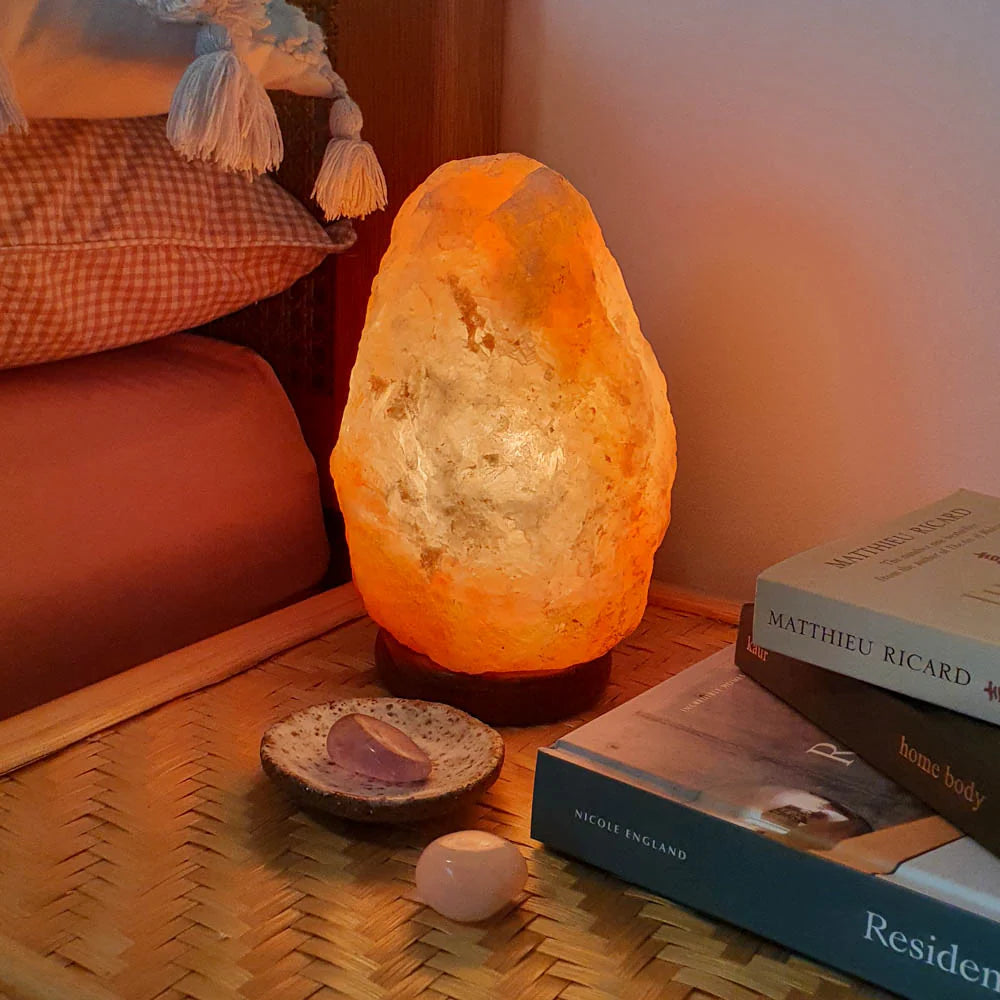


Himalayan salt pet environment explained
Himalayan salt products are decorative minerals, most commonly sold as carved lamps, that are marketed to improve indoor air quality but carry real health risks for household pets. The himalayan salt pet environment explained debate matters because millions of UK pet owners display these products without knowing the specific dangers they present to cats and dogs. Thehimalayansalt offers a range of authentic salt lamps and edible salt variants, and understanding how each product type interacts with your pet’s environment is the difference between safe enjoyment and a veterinary emergency.
How does himalayan salt affect pet health?
Salt poisoning, known clinically as hypernatremia, is the primary physical risk Himalayan salt products pose to pets. It occurs when a dog or cat ingests enough sodium to disrupt the body’s fluid balance, causing cells to dehydrate from the inside out. The symptoms escalate quickly and can become life-threatening within hours.
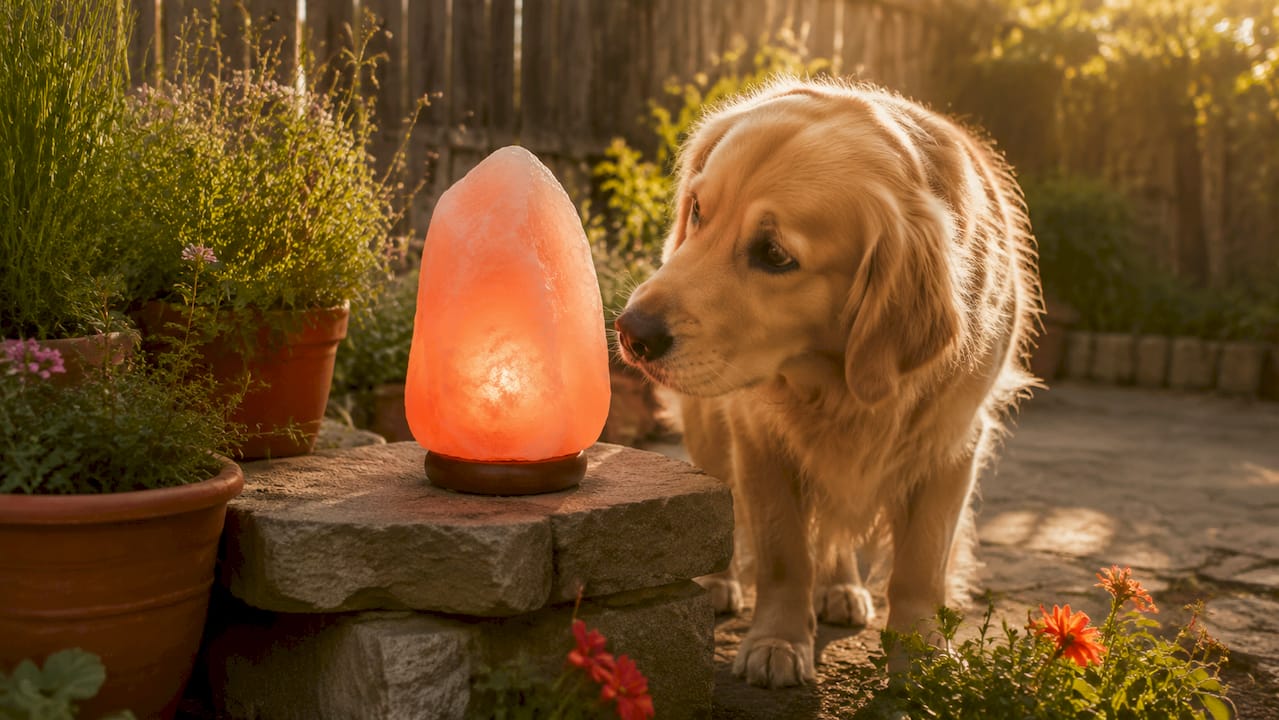
The main exposure route is repeated licking. Pets are attracted to the mineral taste of salt lamps, and a single session at the lamp’s surface can deliver a meaningful dose of sodium. Dogs can experience serious toxicity at around 2 grams of salt per kilogram of body weight. A medium-sized Labrador weighing 30 kg therefore reaches a dangerous threshold after ingesting roughly 60 grams, which is far less than it sounds when a curious dog licks a lamp repeatedly over an evening.
Symptoms to watch for include:
- Vomiting and diarrhoea within the first hour
- Excessive thirst and frequent urination
- Lethargy and loss of coordination
- Muscle tremors or seizures in severe cases
- Coma in the most critical presentations
Cats face the same risks, often with lower tolerance thresholds due to their smaller body weight. Continuous licking causes salt poisoning risks that can be life-threatening, and veterinary experts stress that the danger is cumulative rather than acute. One brief lick is unlikely to cause harm. Repeated access over days or weeks is the real pattern to prevent.
Pro Tip: If you suspect your pet has been licking a salt lamp, offer fresh water immediately and contact your vet. Providing ample water helps flush excess sodium, but it does not replace professional veterinary treatment.
Do salt lamps actually purify air for pets?
The air purification claim is the most widely repeated myth about Himalayan salt lamps, and the science does not support it. The theory is that heated salt releases negative ions, which bind to airborne pollutants and cause them to fall out of the air. The mechanism is plausible in theory. The problem is scale.
Consumer salt lamps emit ion output indistinguishable from background levels. The surface area of a household lamp and the heat generated by a standard bulb are simply too small to produce measurable ionisation in a room. No peer-reviewed study has demonstrated that a Himalayan salt lamp removes a quantifiable amount of dust, allergens, or pathogens from indoor air.
Here is how salt lamps compare to proven air quality methods:
| Method | Ion or Particle Output | Evidence for Air Cleaning | Best Use |
|---|---|---|---|
| Himalayan salt lamp | Negligible, unmeasured | None in real indoor settings | Ambient lighting and décor |
| HEPA air purifier | Active mechanical filtration | Strong, lab-validated | Removing allergens and particles |
| Improved ventilation | Fresh air exchange | Strong, widely recommended | Reducing CO2 and humidity |
| Ioniser device | Measurable ion output | Mixed, some ozone concerns | Supplementary air treatment |
HEPA systems actively circulate and filter room air, whereas salt lamps sit passively and rely on ambient warmth. If your goal is genuinely cleaner air for your pets, a certified HEPA purifier is the right tool. Salt lamps provide amber ambient lighting that many people find calming. That is a legitimate benefit. Calling it air purification is not accurate.
How does salt’s hygroscopic nature create safety risks?
Hygroscopicity is the technical term for a material’s ability to absorb moisture from the surrounding air. Himalayan salt is highly hygroscopic, which is why salt lamps in humid rooms visibly “sweat,” producing a wet surface and sometimes pooling water at the base. This property creates two distinct safety problems in homes with pets.
The first is electrical hazard. Humidity causes salt lamps to produce moisture on their surfaces, and that moisture can track down the lamp’s cord or seep into the bulb fitting. A lamp without proper safety certification is a fire or electrocution risk, particularly in bathrooms or kitchens where humidity is higher. Always check that your lamp carries a UK electrical safety mark.
The second problem is pet attraction. A wet salt surface is even more appealing to a licking pet than a dry one. The moisture concentrates the salt flavour and makes the surface easier to lick. Positioning matters enormously here.
Follow these steps to manage hygroscopic risks safely:
- Place lamps on elevated surfaces that pets cannot reach by jumping or climbing.
- Keep lamps in rooms with stable, low humidity. Avoid bathrooms and kitchens.
- Use a drip tray under the lamp base to catch moisture and protect surfaces.
- Inspect the power cable weekly for salt residue or moisture damage.
- Turn the lamp off when you leave the room if pets have unsupervised access.
Pro Tip: A humidity management routine keeps your lamp in better condition and reduces the wet surface problem that attracts pets. Run the lamp for several hours daily to keep the salt warm and dry.
Salt lamps vs salt blocks: what is safe for pets?
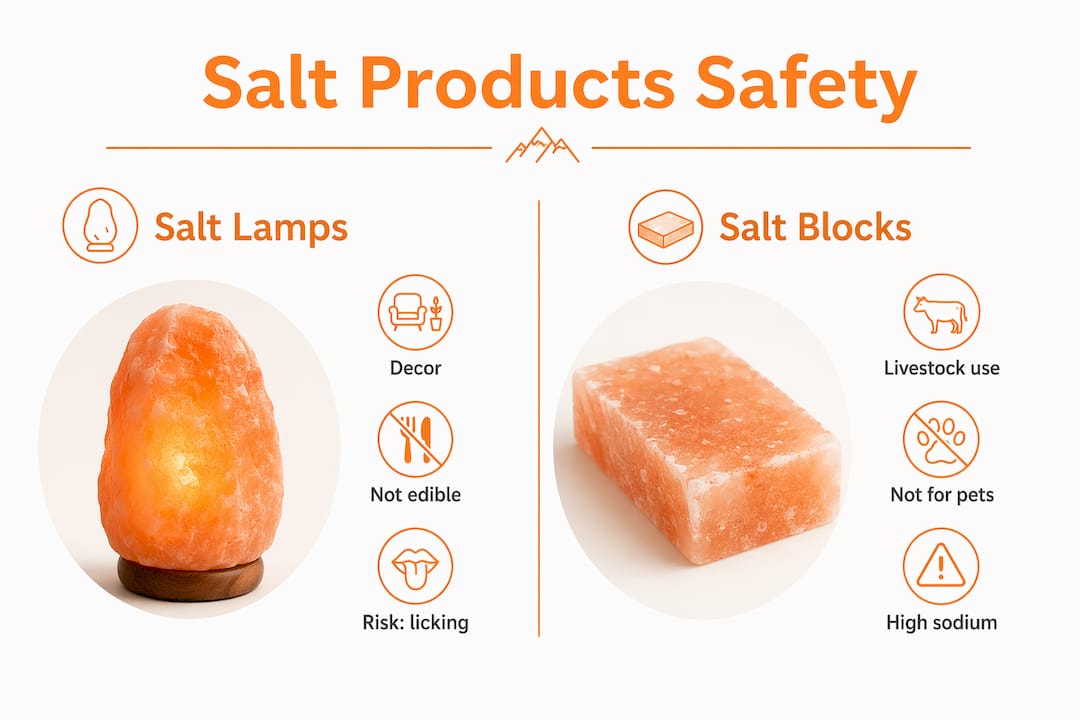
Salt crystal lamps, edible Himalayan salt, and livestock salt blocks serve distinct functions and carry different safety profiles. Confusing them is one of the most common mistakes pet owners make. Understanding the difference protects your animals.
Livestock salt lick blocks are mineral supplements designed for horses, cattle, and sheep. They are weather-resistant, sized for large animals, and formulated for species with very different sodium tolerances than cats or dogs. Placing a livestock salt block in a home with a dog or cat is genuinely dangerous. The block is accessible, appealing, and sized for an animal that can consume far more sodium than your pet can safely process.
Here is a clear breakdown of product types and their suitability:
| Product Type | Intended Use | Safe for Cats and Dogs? |
|---|---|---|
| Himalayan salt lamp | Décor and ambient lighting | Safe if kept out of reach |
| Edible Himalayan salt | Human cooking and seasoning | Only in tiny culinary amounts |
| Livestock salt lick block | Mineral supplement for large animals | Not suitable for household pets |
| Pet-specific mineral supplement | Vet-formulated for cats or dogs | Only under veterinary guidance |
Using salt supplements without veterinary advice is risky for cats and dogs regardless of the source. Some minerals in Himalayan salt, including trace amounts of iron, potassium, and magnesium, may benefit certain animals. The problem is that the sodium content overwhelms any mineral benefit at the doses a curious pet might self-administer. Always consult your vet before introducing any salt-based supplement to your pet’s routine.
What are the safest ways to use salt products around pets?
The safest approach to Himalayan salt pet care is physical separation. Keeping lamps out of reach is more reliable than any behavioural training, because salt’s taste is a powerful and consistent motivator for most animals.
Practical safety measures include:
- Place lamps on high shelves, mantelpieces, or inside closed display cabinets with glass fronts.
- Use a lamp with a wide, stable base to reduce the chance of it being knocked over by a jumping cat.
- Secure power cables with cable clips or run them through trunking to prevent chewing.
- Monitor your pet’s behaviour when you first introduce a lamp. Early curiosity is normal; persistent attempts to reach the lamp require a change in placement.
- Keep fresh water available at all times. Adequate hydration is the first line of defence against sodium imbalance.
For pet owners whose primary goal is cleaner indoor air, invest in a certified HEPA air purifier rather than relying on a salt lamp. Brands like Dyson, Blueair, and Levoit produce units with verified filtration performance. Pair this with regular ventilation, particularly after cooking or cleaning with chemical products, and you will achieve measurably better air quality for both you and your pets.
You can still enjoy a salt lamp in your home. Position it correctly, check it regularly, and treat it as the beautiful decorative object it genuinely is. Learn how to identify a genuine salt lamp to avoid poorly made products with substandard electrical components.
Key takeaways
Himalayan salt lamps are safe decorative products for pet owners when placed out of reach, but they do not purify air and pose a real poisoning risk if pets can lick them.
| Point | Details |
|---|---|
| Salt poisoning is cumulative | Repeated licking, not a single exposure, causes dangerous hypernatremia in cats and dogs. |
| Air purification claims are unsupported | Salt lamps emit negligible ions; HEPA purifiers are the proven choice for cleaner pet environments. |
| Hygroscopicity creates dual hazards | Moisture on lamp surfaces attracts pets and risks electrical faults without proper safety certification. |
| Product types are not interchangeable | Livestock salt blocks, decorative lamps, and edible salt carry entirely different risk profiles for household pets. |
| Physical separation is the best safeguard | Elevated placement and cable management remove risk more reliably than behavioural training alone. |
What i’ve learnt from years around salt lamps and pets
I’ve spent a long time reading pet care forums and speaking with owners who genuinely love their Himalayan salt lamps. The same misunderstanding comes up constantly. People assume that because the lamp is “natural,” it is automatically safe for animals. Natural and safe are not the same thing. Salt is entirely natural. It is also one of the most common causes of accidental pet poisoning in the home.
The detail that most people miss is the cumulative exposure pattern. Owners notice their cat sniffing the lamp once and think nothing of it. What they don’t track is that the cat returns every evening for a lick while the household is watching television. By the time symptoms appear, the animal has been quietly accumulating sodium for weeks. That pattern is far more dangerous than a single incident, and it is entirely preventable with a change in lamp placement.
Cable management is the other thing I rarely see discussed. A wet salt lamp cable at floor level is a chewing target for dogs, and the combination of moisture and a curious terrier is genuinely alarming. Running cables through wall trunking or securing them with clips takes ten minutes and removes the risk entirely.
My honest advice is this: enjoy your salt lamp for what it actually is, a beautiful, warm light source with a distinctive mineral aesthetic. Do not rely on it for air quality. Do not place it where your pet can reach it. Check it weekly for moisture. Those three habits let you keep the lamp and keep your pet safe.
— asad
Explore thehimalayansalt’s range for your home
Thehimalayansalt crafts every lamp from 100% genuine Himalayan salt, with quality electrical components and stable bases designed for real homes. Whether you want a statement piece or something compact for a bedroom shelf, there is an option that works beautifully without compromising your pet’s safety.
The large 22–26 kg salt lamp suits open living spaces and sits at a height that makes elevated placement straightforward. For smaller rooms, the Grey Himalayan Salt Lamp offers a compact, stable option with a distinctive cool-toned finish. Free UK shipping is included on all orders. Browse the full crafted salt lamps collection and find the right fit for your home today.
FAQ
Is himalayan salt safe for pets to lick?
Occasional brief contact is unlikely to cause immediate harm, but repeated licking is life-threatening due to cumulative salt poisoning. Keep all salt products out of your pet’s reach as a standard precaution.
Do himalayan salt lamps improve air quality for animals?
No. Ion output from consumer lamps is indistinguishable from background levels and does not remove airborne pollutants. A HEPA air purifier is the evidence-backed choice for improving air quality in homes with pets.
What are the symptoms of salt poisoning in dogs?
Symptoms include vomiting, excessive thirst, lethargy, loss of coordination, and seizures. Dogs reach toxic thresholds at approximately 2 grams of salt per kilogram of body weight, so contact your vet immediately if you suspect ingestion.
Can i use a himalayan salt lick block for my dog or cat?
No. Livestock salt blocks are sized and formulated for large animals with very different sodium tolerances. They are not appropriate for household pets and should never be left accessible to cats or dogs.
Where is the safest place to put a salt lamp in a home with pets?
Place the lamp on a high shelf or mantelpiece that your pet cannot reach by jumping. Secure the cable, use a drip tray, and keep the lamp in a low-humidity room to reduce both moisture hazards and pet attraction to the surface.