

What Shapes Do Salt Lamps Come In?
Himalayan salt lamps come in a surprisingly wide range of shapes, from raw, uncarved chunks to precisely worked spheres, pyramids and hearts. This guide is a straightforward catalogue of the common forms you will encounter, what each one looks like, the kind of light it gives and where it tends to suit best. One point is worth making up front: a lamp's shape is an aesthetic choice. It changes how the light falls and how the piece looks in a room, but it does not give a lamp any air-cleaning or health property, because salt lamps do not have those in the first place. Whatever form you choose, the honest benefit is the same warm, decorative glow.
What natural shapes do salt lamps come in?
Natural, or rough, salt lamps are made from raw Himalayan salt with minimal cutting. The outer surface is left largely as it comes from the block, so each one keeps its irregular, craggy character and no two are alike. These are the most rustic option, and their uneven faces scatter light in many directions for a warm, flickering effect that smoother lamps cannot quite match.
- Natural rough chunk. The classic form: a single raw salt crystal on a base, trimmed only enough to sit securely.
- Cluster. Several smaller crystals grouped on one base for a multi-directional glow.
- Freeform sculpture. A larger, artistically irregular piece meant to work as a statement object.
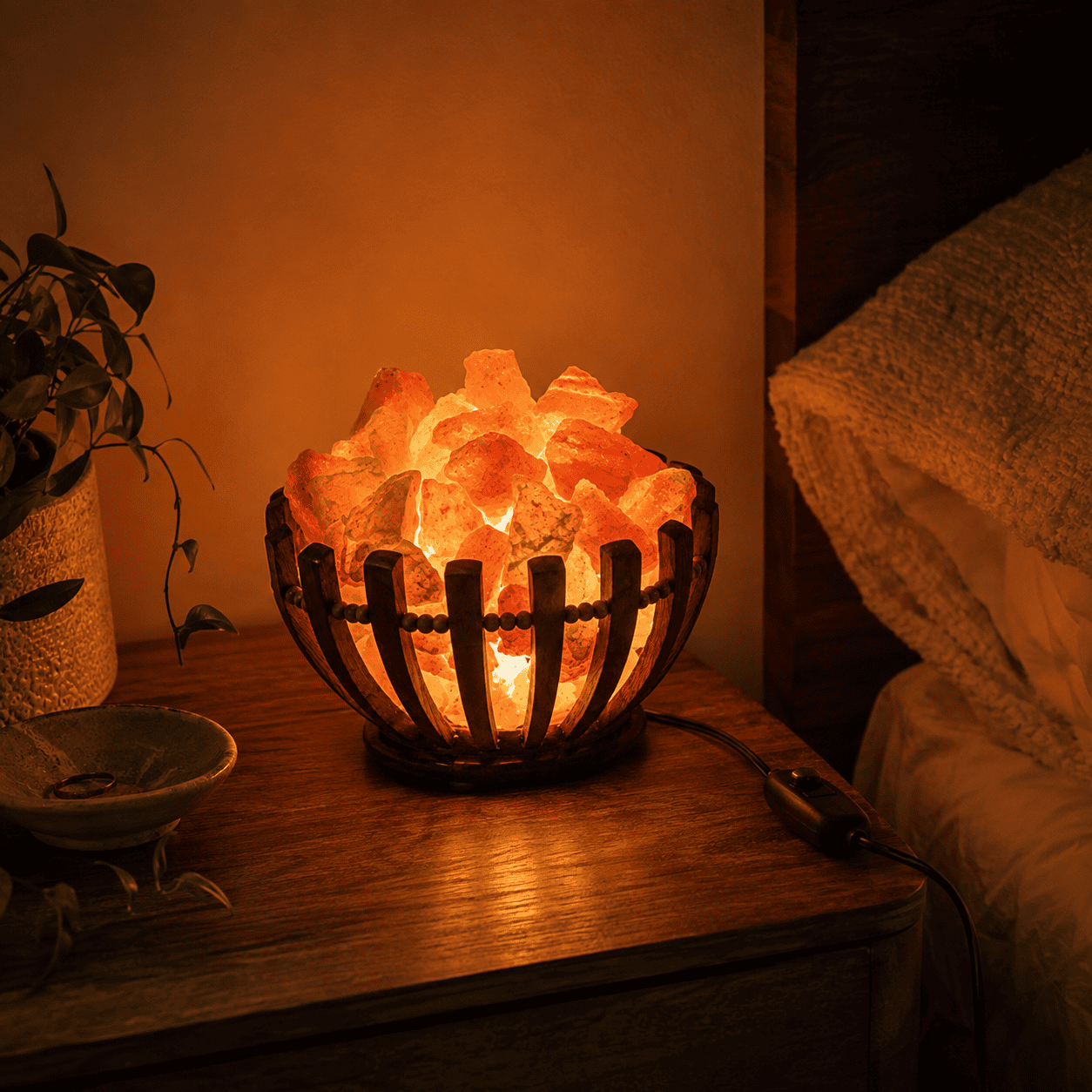
- Basket lamp. Loose salt chunks held in a wooden or metal basket, giving a rugged, textured look through the frame.
Because less material is removed, natural shapes tend to feel dense and substantial for their size, which many people associate with quality. They suit rustic, bohemian and Scandinavian-leaning interiors especially well.
What carved and geometric shapes are available?
Carving removes material to create a defined form, whether geometric or figurative. Carved lamps give a cleaner, more uniform glow than rough chunks and let you pick a shape with a specific look or meaning. Even so, because they are cut from natural salt, each carved lamp still carries its own internal veining and colour, so no two are truly identical.
- Sphere or ball. A round lamp that spreads light evenly in all directions; one of the most popular carved forms.
- Pyramid. A four-sided form that concentrates a soft glow upwards and suits modern desks and shelves.
- Heart. A gift-friendly, symbolic shape that works well in bedrooms and personal spaces.
- Bowl or fire bowl. A carved bowl holding loose salt chunks around the bulb, so light glows up through the pieces.
- Obelisk or tower. A tall, slender form that draws the eye upward and suits narrow surfaces.
- Cube. A clean, architectural block that fits minimalist and contemporary rooms.
- Geometric and figurative. Diamonds, cylinders, leaves, flowers and tree motifs bridge natural and carved styles.
Which shape gives which kind of light?
Shape has a real effect on the light a lamp produces, more so than colour does. Rough, uneven surfaces scatter light irregularly for a warm, layered glow, while smooth carved forms give a more even, consistent spread. This is purely an aesthetic and lighting difference; it does not change what a salt lamp does, which is provide gentle, decorative light. Any claims that one shape purifies air better than another are unfounded, because salt lamps do not purify air at all.
| Shape | Light character | Style it suits | Good for |
|---|---|---|---|
| Natural rough chunk | Warm, irregular, flickering | Rustic, bohemian, Scandinavian | Living room focal point |
| Cluster | Multi-directional | Rustic, natural | Side tables, layered lighting |
| Sphere / ball | Even, all-round | Modern, minimalist | Bedrooms, offices |
| Pyramid | Concentrated, upward | Contemporary | Desks and shelves |
| Heart | Soft, even | Personal, decorative | Bedrooms, gifts |
| Bowl / fire bowl | Glow through loose chunks | Rustic, eclectic | Coffee tables, mantels |
| Obelisk / tower | Tall, upward accent | Modern, architectural | Narrow surfaces |
| Cube | Clean, even | Minimalist | Contemporary shelving |
| Basket lamp | Textured, broken up | Rustic, industrial | Hallways, feature corners |
How do bases affect the overall design?
The base is part of the design, not an afterthought. It also has a practical job, since salt is hygroscopic and can develop slight surface dampness in humid conditions, and a good base protects the surface beneath. A heavy natural chunk needs a wide, solid wooden base for stability, while a delicate carved sphere often looks best on a slimmer base that does not compete with the crystal above.
- Weight and stability. Larger, heavier lamps need wider bases with a low centre of gravity.
- Material contrast. Warm wood complements amber salt; cooler stone or metal creates a more contemporary contrast.
- Style match. Rustic wooden bases suit rough chunks; sleeker bases suit carved geometric shapes.
Basket lamps combine the salt and the base into a single framed unit, which is worth bearing in mind if you like the rugged look of loose chunks held in a wooden or metal cage.
How to choose the right shape for your room
Once you know the forms, matching a shape to a room is straightforward.
- Living room. A large natural chunk or freeform sculpture makes a striking focal point; a cluster on a side table adds layered warmth.
- Bedroom. A sphere or heart gives a soft, even glow that suits a relaxing space and makes a thoughtful gift.
- Home office. A pyramid or cube on a desk adds warmth without clutter and softens harsh screen light in the evening.
- Feature corner. An obelisk or a basket lamp works well where you want height or texture without a large footprint.
- Small spaces. A compact carved shape sits neatly on shelves and windowsills where a large chunk would dominate.
Key takeaways
| Point | Details |
|---|---|
| Two broad families | Natural rough forms and carved or geometric forms, each with a different look and light. |
| Natural shapes | Rough chunks, clusters, freeform and basket lamps give a warm, irregular glow. |
| Carved shapes | Spheres, pyramids, hearts, bowls, towers and cubes give a cleaner, more even glow. |
| Shape is aesthetic | Form affects look and light only; it gives no air or health benefit. |
| Every lamp is unique | Natural salt variation means even matching shapes differ in colour and veining. |
Frequently asked questions
What shapes do Himalayan salt lamps commonly come in?
Common forms include natural rough chunks, clusters, freeform sculptures and basket lamps, plus carved shapes such as spheres, pyramids, hearts, bowls, obelisks and cubes. Each gives a slightly different quality of light and suits different décor.
Does the shape change what a salt lamp does?
Shape changes only how the lamp looks and how its light falls. It does not give a lamp any air-cleaning or health benefit, as salt lamps do not have those. Every shape offers the same warm, decorative glow.
Are carved lamps still unique if they share a shape?
Yes. Because they are cut from natural salt, even two lamps of the same carved shape differ in colour, veining and glow.
Which shape suits a bedroom best?
A sphere or heart tends to suit bedrooms, as both give a soft, even glow, and the heart carries a warm symbolic meaning that works well in personal spaces.
You can browse rough and carved options in our natural salt lamps and crafted salt lamps collections, or see the framed, chunk-filled style in our wooden basket lamps. For a closer look at popular figurative forms, read our guide to shaped salt lamps in heart, ball and pyramid designs.