

How to Choose Quality Himalayan Salt Products: A 2026 Buying Guide

Shopping for Himalayan salt products, whether a lamp for the living room, edible salt for the kitchen or bath salt for a relaxing soak, can be surprisingly tricky. Quality, provenance and shipping costs vary a lot between sellers, and marketing claims often outrun the facts. This honest 2026 buying guide walks through what actually matters when choosing Himalayan salt lamps, edible salt and bath products, so you can shop with confidence and avoid the common pitfalls.
What to look for in a Himalayan salt lamp
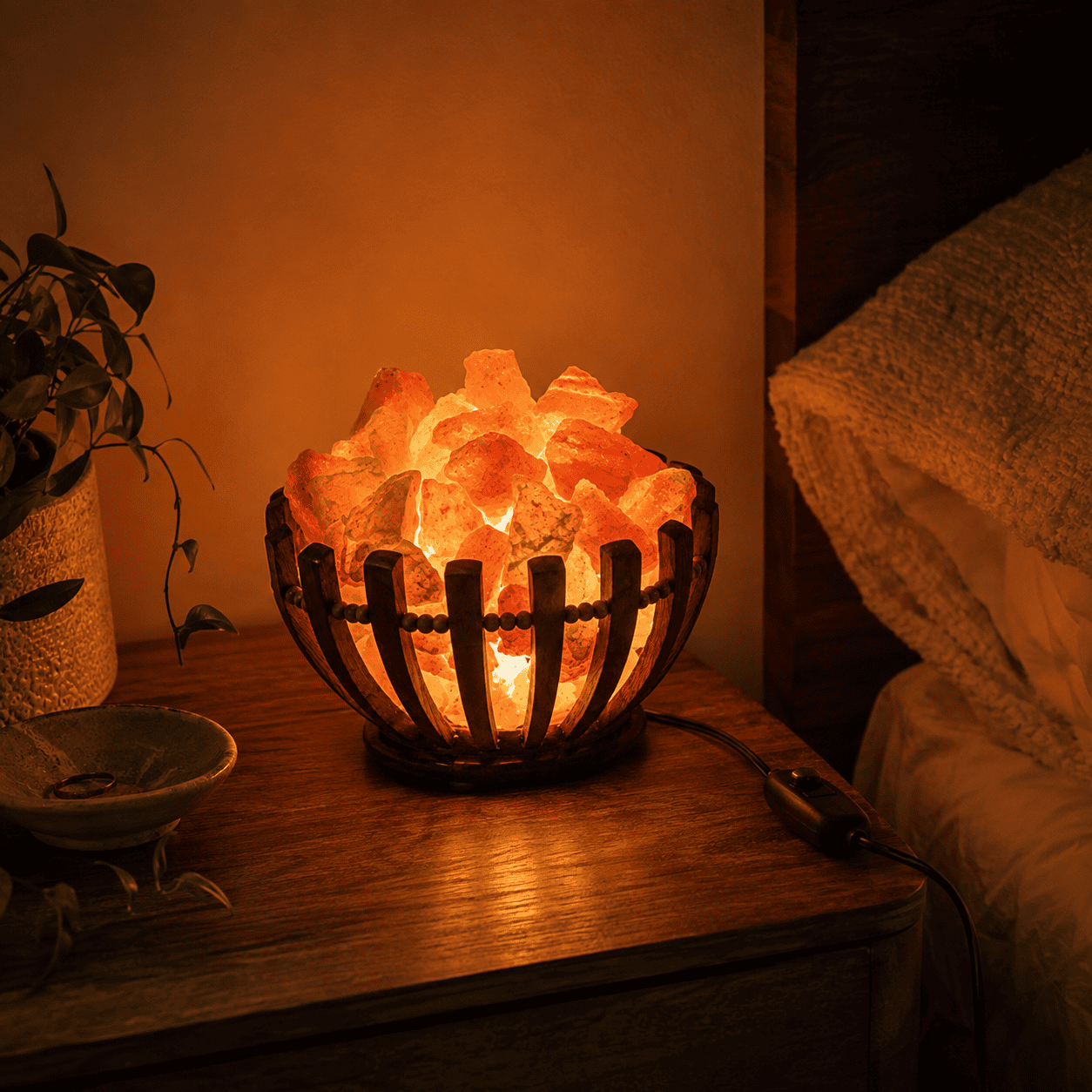
A salt lamp’s appeal is its warm, dim amber glow, which gives a calming, low-blue-light ambience in the evening. It is worth being clear on one point up front: there is no credible evidence that salt lamps purify air or release meaningful negative ions. Treat any air-purification or ion-therapy claim with caution. Choose a lamp for its atmosphere and craftsmanship instead, and judge it on these practical points:
- Natural colour and veining: genuine salt shows variation from pink to amber with small imperfections, rather than a uniform, artificially vivid tone.
- A sturdy base: solid wood is more stable and heat-tolerant than thin plastic near a warm bulb.
- Clear origin: the product should state Pakistan or the Khewra Salt Mine region, not just a vague “Himalayan” label.
- Sensible size and bulb: a low-wattage bulb suits a bedside nightlight, while larger lamps work as a statement glow for living spaces. USB or LED options give a gentler, cooler-running alternative.
- Hygroscopic care: salt attracts moisture and can “sweat” in humid rooms, so keep the lamp switched on regularly to dry it out.
Choosing edible Himalayan salt
Edible Himalayan salt is chosen for its texture, colour and provenance rather than any nutritional advantage. To be accurate: it is roughly 96 to 98 percent sodium chloride, with the remaining couple of percent made up of minor trace minerals. Its sodium content per gram is essentially the same as ordinary table salt, and its iodine content is negligible, so anyone relying on iodised salt should keep that in mind. What it offers cooks is a pleasant grain, a distinctive colour and a clear source story. When buying, look for:
- No additives: good edible salt lists nothing but the salt itself; natural clumping in humid conditions is normal, not a fault.
- The right grind: fine salt for everyday seasoning and baking, coarse salt for grinders, finishing and rubs.
- Food-safe packaging: resealable or glass containers keep salt dry and are more pleasant to store and gift.
Choosing bath and spa salt
Himalayan bath salt is enjoyed for a warm, relaxing soak and a spa-like feel at home. The experience is sensory and pleasant; as with lamps, it is best not to expect medical benefits. When choosing bath products, check that they are clearly labelled for bathing rather than eating, look for simple ingredient lists, and consider presentation if the item is a gift, since glass jars and reusable containers tend to feel more considered than plastic wrap.
A quick buyer’s checklist
The table below summarises the key checks across the three main product types:
| Product type | What to check | What to ignore |
|---|---|---|
| Salt lamp | Natural veining, solid base, stated origin, sensible size and wattage | Air-purification and negative-ion claims |
| Edible salt | No additives, correct grind, food-safe packaging, clear source | Claims of being “healthier” than table salt |
| Bath and spa salt | Labelled for bathing, simple ingredients, good packaging | Medical or therapeutic promises |
Practical factors: shipping, provenance and support
Beyond the product itself, a few practical factors make a real difference to the experience. Salt lamps are heavy and fragile, so shipping cost and packaging quality matter; free or clearly stated UK delivery removes a common source of frustration. Transparent provenance is worth prioritising, since a clear origin from the Khewra Salt Mine region is the best signal of a genuine product. Finally, look for sellers with responsive customer support and a clear returns policy, which is especially reassuring for fragile electrical items like lamps.
Where The Himalayan Salt fits in
For UK shoppers, The Himalayan Salt is a strong option on exactly these practical points. It offers a genuine range of artisan-carved lamps, edible salts and bath products with clear origin information, and every order ships free across the UK, which removes the carriage cost that often makes fragile salt items awkward to buy online. You can compare formats and sizes across its natural salt lamps, edible salt and health and beauty collections.
Frequently asked questions
Do Himalayan salt lamps purify the air?
No. There is no credible evidence that salt lamps purify air or emit meaningful negative ions. Choose one for its warm, calming glow rather than any air-quality claim.
Is Himalayan salt healthier than ordinary table salt?
Not meaningfully. It is around 96 to 98 percent sodium chloride, so its sodium content per gram is essentially the same as table salt, and its iodine content is negligible. It is chosen for texture, colour and provenance.
How do I know a Himalayan salt product is genuine?
Look for natural colour variation and veining, clear origin labelling naming Pakistan or the Khewra Salt Mine, simple ingredient lists on edible salt, and a sturdy wooden base on lamps.
What should I check before buying a salt lamp online?
Confirm the size and bulb suit your intended use, check shipping cost and packaging for fragile items, and look for a clear returns policy and responsive support.
Shop with confidence
Choosing well comes down to a few honest checks: genuine provenance, sensible expectations, and a seller with fair shipping and support. If you are ready to browse, explore the crafted salt lamps and new arrivals, or read our ultimate guide to salt lamp benefits and types and our 2026 guide to reading salt product labels for more detail before you buy.