

Daily Wellness Routines with Himalayan Salt: A Simple, Honest Guide
Most people who buy Himalayan pink salt from us aren't chasing a cure. They want a nicer bath, a warmer-looking room, something pleasant to cook with. That's the honest frame for a daily wellness routine with Himalayan salt: it's versatile and it feels good to use, and it slots into cooking, bathing and the little end-of-day rituals without pretending to be medicine.
One fact up front, because it shapes everything below. Himalayan pink salt is roughly 95 to 98% sodium chloride, the same core compound as ordinary table salt. The rest is a scatter of trace minerals like magnesium, potassium and calcium. They give the crystals their colour, but there's too little of them to change anything nutritionally, and there's next to no iodine in it. So if iodised table salt is your usual, don't drop it entirely. Everything past this point is lifestyle and atmosphere, not treatment.
A Sensible Starting Point: Salt and Your Daily Limit
Every way you eat pink salt still counts as salt. UK guidance from the NHS puts adults at no more than 6 grams a day, about a level teaspoon, which works out to roughly 2.4 grams of sodium. The World Health Organization aims a little lower, under 5 grams. Sodium isn't the enemy here. You lose it through sweat and your body needs some. The point is moderation, not avoidance.
That changes how a "salt routine" should look. You're not sprinkling salt on everything for imagined benefits. You season a meal well, maybe take a small pinch in water now and then, and lean on the uses that never touch your bloodstream at all, the soaks and the scrubs.
Morning: Gentle Ways to Begin the Day
Season Your Breakfast Thoughtfully
The plainest use is cooking. A light hand on eggs, porridge, a bit of avocado. The crystals are mild and flaky, which makes pink salt a nice finishing salt, and enjoying your food more is reason enough to keep it in the cupboard. It counts toward that 6 g, mind, so season to taste and not by the spoonful.
A Small Pinch in Your Morning Water
Some people drop a tiny pinch into a morning glass of water. Sodium's an electrolyte, so it can add a little to hydration, mostly if you've been sweating hard, say after an early run or on a hot day. Here's the caveat, and I'll only say it once: this isn't a detox, it doesn't flush toxins, and it won't balance your pH. Your kidneys and liver already do all of that. The salt still counts toward your limit, so keep the pinch genuinely small, and skip it if you've got high blood pressure or you've been told to watch your sodium. If you want the fuller picture on this one habit, our guide to adding a pinch of Himalayan salt to water walks through when it helps and when it's pointless.
Daytime: Ambience and Small Rituals
Salt Lamp Atmosphere
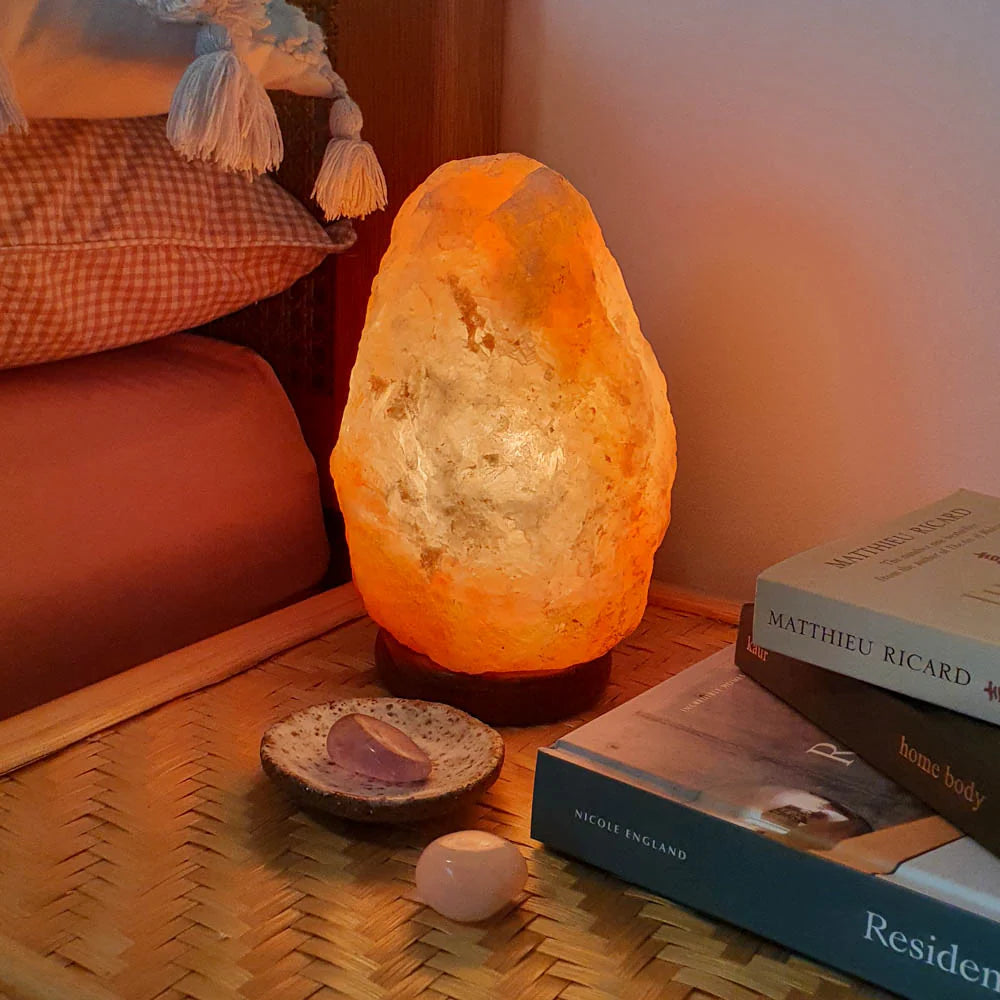
A salt lamp throws a soft amber glow that reads as warm and calm on a desk or in a reading corner. That low light is a decent cue to slow down. Enjoy it for exactly that. The claims about lamps pumping out "negative ions," cleaning the air or lifting your mood don't hold up, so treat it as good mood lighting and nothing grander.
A Mindful Pause
A warm drink, a few minutes off the screen, the overheads dimmed. That's a midday reset, and none of it actually needs salt. But a lamp glowing in the corner makes the whole setup feel a bit more like somewhere you'd want to sit.
Evening: Unwinding Before Bed
A Relaxing Salt Bath or Foot Soak
A warm bath with a scoop of bath salt is one of the better evening rituals, and the benefit is relaxation, full stop. Warm water eases the feeling of tension in tired muscles and buys you a quiet ten minutes. The minerals almost certainly aren't soaking into you in any meaningful amount, so the value is the warmth and the calm, not detox.
No bath? A basin of warm water and a handful of salt gives your feet the same soothing end to the day, especially good after you've been on them since morning. Follow it with slow breathing or a quick rub. Our write-up on salt foot soaks for tired feet goes further, and there are more soak ideas across our spa and massage collection.
A Simple Salt Body Scrub
Fine salt makes a good natural exfoliant. Two tablespoons or so, mixed into a tablespoon of a carrier oil like coconut or almond, a drop of lavender if you fancy it, then worked gently over damp skin and rinsed off. Skin feels smoother afterwards. Keep it light, stay off broken or sore patches, and leave your face out of it if the grit feels too sharp. There's a fuller method in our guide to salt scrubs for skin exfoliation.
A Sample Daily and Weekly Routine
You don't need all of it every day. Here's one realistic way to spread the habits across a week, keeping dietary salt moderate and leaning on the non-food uses to unwind.
| When | Ritual | What to expect |
|---|---|---|
| Each morning | Season breakfast to taste; optional tiny pinch in water after exercise | Enjoyable flavour; minor electrolyte top-up (counts toward salt limit) |
| Daytime | Salt lamp on the desk | Warm, low-light ambience for a mindful pause |
| 2 to 3 evenings a week | Warm salt bath or foot soak | Relaxation and a wind-down cue before sleep |
| Once or twice a week | Gentle salt body scrub | Smoother-feeling, exfoliated skin |
| Every night | Salt lamp as soft bedside light | Cosy, screen-free atmosphere |
An Honest Note on Expectations
Himalayan salt is a lovely, versatile ingredient for cooking and self-care, but it isn't a medicine. It won't detox your body, cure ailments or stand in for a balanced diet, decent sleep and regular movement. Keep total salt within NHS guidance of no more than 6 g a day, and if you have high blood pressure, kidney problems or you're pregnant, have a word with your GP or pharmacist before making salt a bigger part of your routine.
Frequently Asked Questions
Can I use Himalayan salt every day?
Yes, seasoned in moderation and used freely in soaks and scrubs. Keep the total you eat and drink under 6 g a day.
Is a morning glass of salt water a detox?
No. Plain water does the job for most people.
Is Himalayan salt healthier than table salt?
Nutritionally they're near enough the same, both around 95 to 98% sodium chloride. The trace minerals in pink salt are too small to matter, and it usually carries little or no iodine, unlike the iodised table stuff. Pick it for the flavour and the look, not the health promises.
Do salt lamps improve air quality or sleep?
No solid evidence they do either. What they've actually got going for them is the soft warm glow, which makes an evening room feel calmer.
Bringing It Together
Treat a salt routine as a handful of small, pleasant habits and it works: season your food with a bit of thought, take the odd soak or scrub, let a lamp set the tone at night. Keep the expectations grounded and the intake sensible. To go wider, browse our health and beauty collection, read the broader wellness, bath and daily routines guide, or start from the basics with the complete guide to Himalayan pink salt.