

Himalayan Salt in Aromatherapy: Blends, Bowls and Everyday Uses

A bowl of pink salt crystals with a few drops of lavender on it will quietly scent a bedroom for hours. That's the whole idea behind Himalayan salt in aromatherapy: the salt isn't treating anything, it's just a base. The porous, crystalline surface holds essential oil and lets the scent drift out slowly instead of vanishing in ten minutes. This guide covers the practical ways to pair the two, from salt bowls and inhalers to bath soaks and blends, with recipes we've used ourselves and clear safety notes so the ritual smells lovely and stays sensible. Most of the pieces you'll want sit in our spa and massage range.
Why Himalayan salt suits aromatherapy
Himalayan salt is around 95 to 98% sodium chloride with roughly 2% trace minerals, which is where the pink-to-amber colour comes from. For aromatherapy the appeal is practical, not medicinal. The coarse, crystalline surface gives essential oils plenty to cling to, so a scent releases slowly rather than all at once. A dish of crystals or a chunky salt piece also just looks and feels grounding on a shelf or bedside table, and that's part of why the ritual works.
Be honest about the limits, and I'll say this once. Salt pulls a little moisture out of the air, which is why a bowl left in a damp bathroom eventually turns sticky, but it doesn't purify a room, strip out allergens or pump out any meaningful negative ions. Treat Himalayan salt here as a natural diffusing surface and a bit of ambience. That's plenty.
Ways to use Himalayan salt with essential oils
Salt bowls
Easiest place to start. Fill a small dish with crystals and drop three to six drops of a diluted blend straight onto the salt. The scent releases quietly over a few hours, which makes bowls ideal for a bedside table, bathroom shelf or hallway. Stir the salt now and then, and top up the oil once the aroma fades.
Salt inhalers and personal blends
A salt inhaler holds coarse crystals in a small pipe you breathe through, and some people like a single drop of a calming oil placed near the mouthpiece, not inside it, for a quick hit of scent. Keep oils well diluted and never inhale them neat. Asthma or reactive airways? Skip this method altogether, since concentrated aromas can set symptoms off.
Bath soaks
Bath salts turn a soak into something closer to a spa. Dissolve a handful of coarse salt in warm running water, then add essential oils that you've first stirred into a carrier oil or a little unscented bath base. That keeps them dispersed instead of floating as stinging droplets on top. Lavender and chamomile suit an evening; eucalyptus and peppermint feel brighter first thing. There's a fuller set of recipes in our guide to DIY Himalayan salt bath soaks for relaxation.
Salt candle and tealight holders
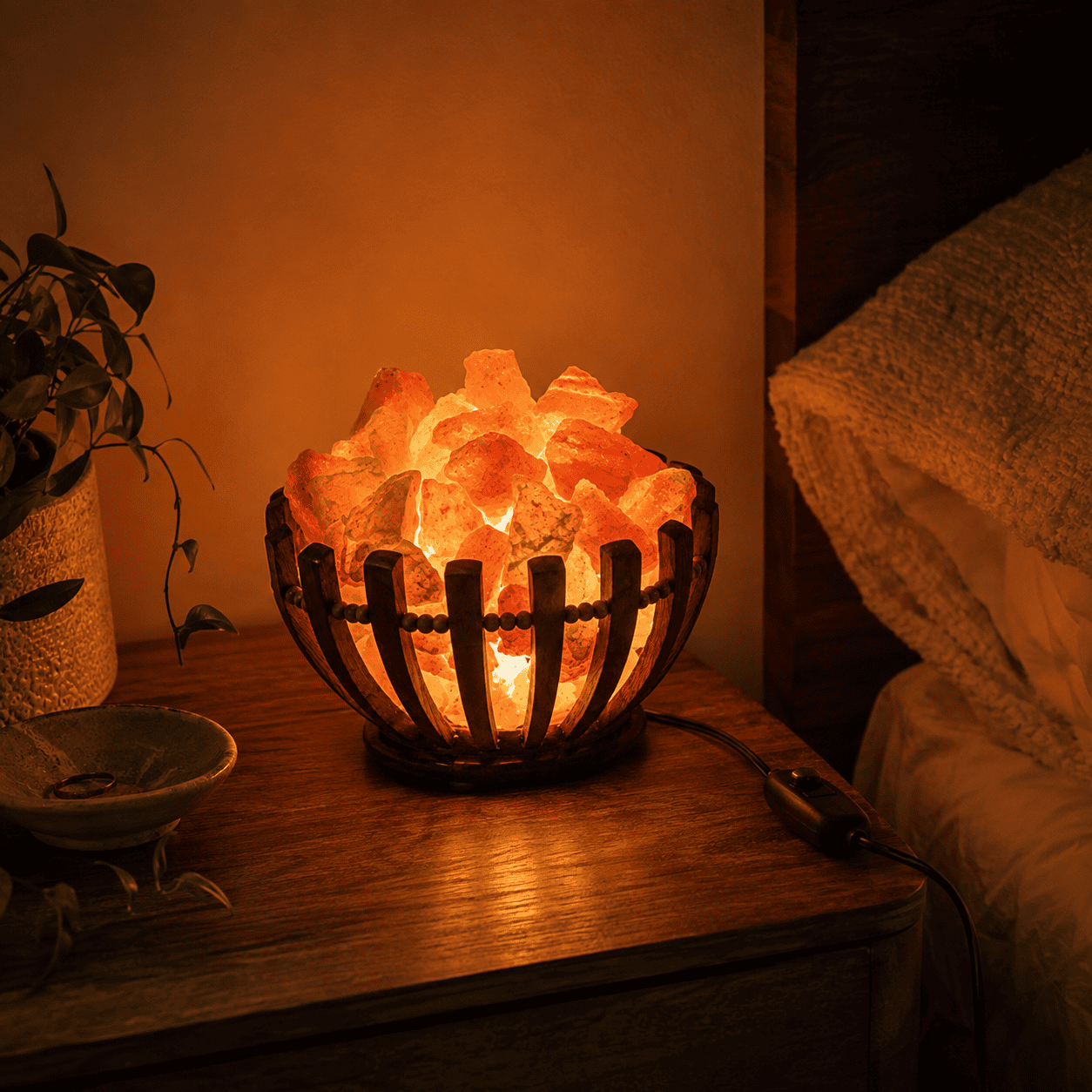
A salt candle holder throws a warm amber glow that sits nicely beside a scented blend. Use the candle for the light and a separate bowl for the aroma. Dropping oil onto a hot surface scorches it and burns off the scent faster.
Aromatherapy blends to try
These are starting recipes. Always dilute properly before adding oils to salt, and adjust the drops to your room size and your own nose.
| Blend | Essential oils | Best for |
|---|---|---|
| Relaxing | Lavender, bergamot, cedarwood | Evening wind-down, bedside salt bowl |
| Uplifting citrus | Sweet orange, lemon, grapefruit | Kitchen or hallway, brighter mornings |
| Focus | Peppermint, rosemary, lemon | Home office or study desk |
| Sleep support | Chamomile, sandalwood, clary sage | Salt bowl near the bed before sleep |
| Fresh & clearing | Eucalyptus, tea tree, lemongrass | Bathroom shelf, cooler months |
Tip: Rotate your blends every few days. Your nose adapts fast to a constant scent, so a change keeps the aroma noticeable and enjoyable.
Matching blends to rooms and moods
| Setting | Suggested pairing | Why it works |
|---|---|---|
| Home office | Peppermint + lemon in a salt bowl | Crisp, bright scents suit daytime focus |
| Spa or bathroom | Rose or geranium with a salt candle glow | Soft, floral ambience for a calming soak |
| Meditation corner | Frankincense + lavender | Warm, grounding aromas for quiet time |
| Living room evening | Cedarwood + sweet orange | Cosy and welcoming without being heavy |
Safety and best practice
Essential oils are concentrated botanical extracts, so a few sensible habits keep aromatherapy pleasant for everyone in the house.
- Always dilute. Never put neat oil on skin, and mix it into a carrier before it goes in a bath. For salt bowls, a few drops on the crystals does it.
- Patch test anything topical. Dab a small diluted amount on your inner forearm and wait 24 hours to check for irritation before you use a blend more widely.
- Keep oils away from pets. Plenty of them, tea tree, eucalyptus, citrus and peppermint among them, are toxic to cats and dogs. Only diffuse in well-ventilated spaces a pet can walk out of, and store the bottles out of reach.
- Care in pregnancy. Some oils are best left alone while you're pregnant or breastfeeding, so check with a qualified professional before using aromatherapy blends.
- Mind asthma and allergies. Strong aromas can trigger breathing symptoms; introduce scents cautiously in a household with asthma or sensitivities and stop if anything feels irritating.
- Keep salt dry between uses, wiping bowls occasionally and letting them dry, since damp salt turns sticky. Swap the crystals every few months to keep them fresh.
- Go easy on strong sensitisers like cinnamon and clove indoors, which can irritate in an enclosed room. Sparingly, if at all.
Himalayan salt vs table salt for aromatherapy
You could drop oils onto any coarse salt, but Himalayan crystals win on looks and texture. The chunky, uneven surface grips oil and lets scent out slowly, and the pink simply looks more inviting than plain white grains. The difference is aesthetic and practical, not about health. If you want the wider background on the salt itself, there's the complete guide to Himalayan pink salt.
Frequently asked questions
Does Himalayan salt make essential oils work better?
Not chemically. It's a textured surface that holds the scent and releases it gradually, which can make a small amount of oil last longer. That's all.
Can I put essential oils directly onto a salt lamp?
Better not. Heat scorches the oil and leaves a residue on a lit lamp. Use a separate bowl for the scent and enjoy the lamp for its glow.
Is salt aromatherapy safe around children and pets?
Yes, with a bit of thought. Keep the oils out of reach, ventilate the room, and remember how many oils are toxic to cats and dogs. With children, scent lightly and don't leave bottles where they can be knocked over or picked up.
How often should I refresh the salt and oils?
Top up the oil when the aroma fades, usually every day or two, stirring the crystals to bring fresh surface up. Replace the salt every three to six months, sooner if it's gone damp or sticky.
Himalayan salt and essential oils make a simple, natural pairing for a calmer, better-smelling home, ambience and ritual rather than medicine. To build a set-up, browse our edible and coarse salt for bowls and soaks and our health and beauty collection. For more relaxation ideas, read our guide to wellness with Himalayan salt baths and daily routines, or fold scent into a wider rhythm with daily wellness routines with Himalayan salt.