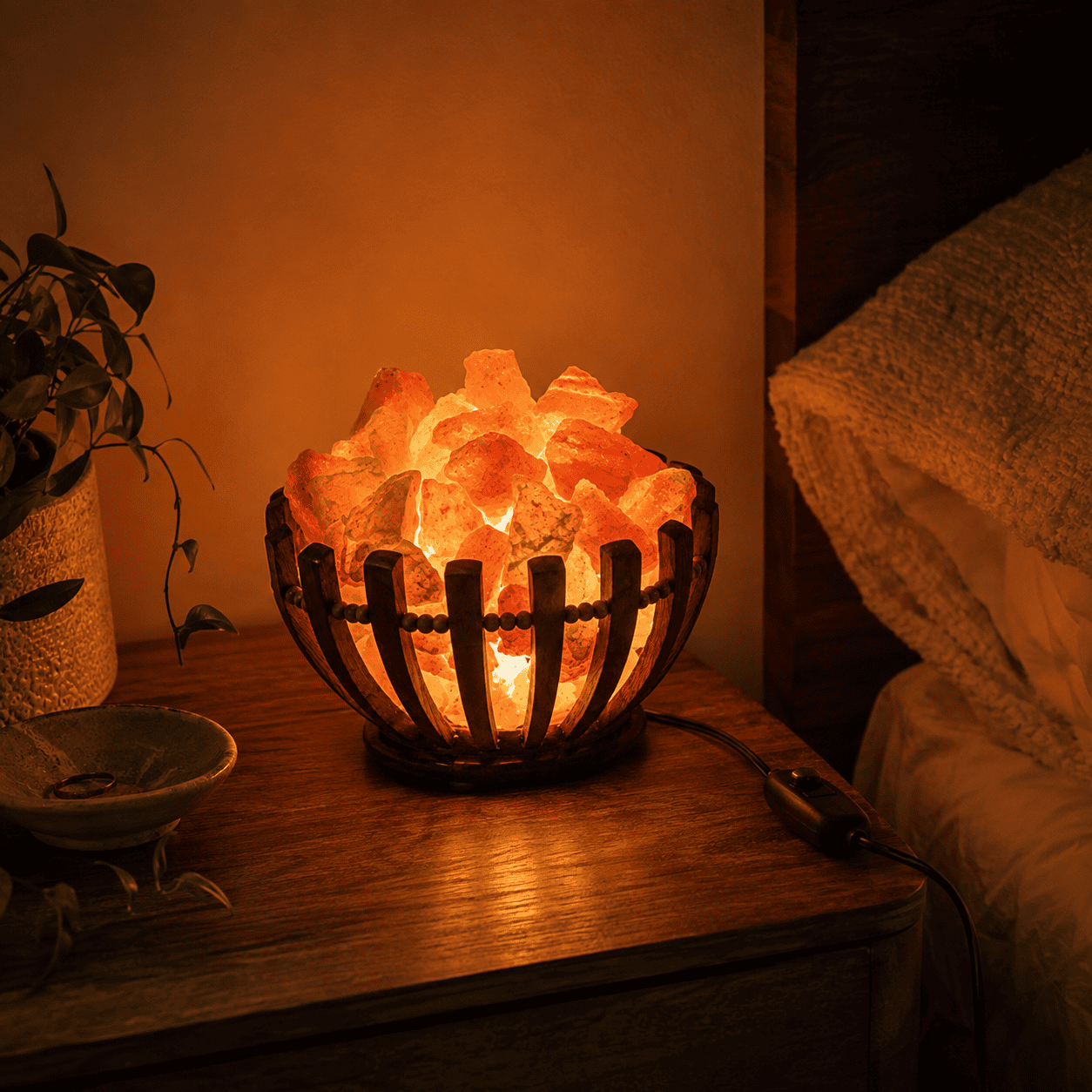


Wellness with Himalayan Salt: Baths, Soaks and Daily Routines

Himalayan pink salt started life on our shelves as something you cook with. These days most of the emails we get about it are nothing to do with the kitchen: people want to know about a Himalayan salt bath, a foot soak, a body scrub, and whether any of it actually does what the wellness blogs promise. So here's the honest version. A salt wellness routine won't detox you or fix anything medical, but a warm mineral soak at the end of a long day is a genuinely lovely thing, and this guide shows you how to build a few gentle rituals into your week. If you want the background on the salt itself, our complete guide to Himalayan pink salt covers where it comes from.
What Makes Himalayan Salt Popular for Bathing
The salt is mined mostly from the Khewra mine in Pakistan, and the pink comes from trace iron in deposits that formed hundreds of millions of years ago. You'll read that it holds dozens of trace minerals, and it does: magnesium, potassium, calcium, plenty of others. The catch is the quantities. They're tiny. Treat those minerals as part of what makes the salt appealing, not as a reason it'll do anything measurable to your body.
What a salt bath reliably delivers is simpler than any of that. Warm water loosens tired muscles. Twenty quiet minutes with the door shut calms you down. Coarse salt makes the water feel silky against your skin. Real, everyday stuff, and enough on its own. Whichever grade you reach for, the soak-friendly options in our spa and massage range are a sensible place to start.
Tip: Look for food-grade or cosmetic-grade salt clearly labelled as Himalayan pink salt so you know it's clean.
An Honest Word on "Detox"
You'll see salt baths sold as a way to "draw out toxins." They don't. Your liver and kidneys already filter waste around the clock, with the skin, lungs and gut chipping in, and soaking in salt water doesn't pull anything out through your skin. When you sweat in a warm bath, that's temperature control, not a clean-out. Transdermal magnesium gets offered up as the mechanism that makes it all work, but the research there is thin and any uptake from bathwater is small. That's the one myth worth naming, and I've named it once. Everything below is about what a soak genuinely gives you: relaxation, warmth, comfortable skin.
Benefits You Can Genuinely Expect
Relaxation and unwinding
Warm water tells your muscles to let go, and it carves out a pause in the day that's hard to get any other way. People tell us the bath itself matters less than the fact that it's twenty minutes with no screen in their hand. A salt soak before bed folds neatly into a wind-down, and the temperature drop as you cool afterwards is part of why a warm bath can help you drift off. Our guide to what a salt bath really does goes into the sleep side properly.
Softer, smoother-feeling skin
Dissolved salt, plus the light friction of a scrub, lifts dull surface cells and leaves skin feeling smoother. Moisturise straight after and you'll notice it more.
Soothing tired muscles and feet
After a long shift on your feet or a hard session at the gym, warm water is a comfort. A full bath does it. So does a basin by the sofa.
Himalayan Salt Bath: Step by Step
A basic salt bath is warm water and a good handful of coarse salt. That's the whole thing. Use this as your template.
| Step | Action | Details |
|---|---|---|
| 1 | Prepare the tub | Fill with warm, not hot, water, around 37 to 39°C |
| 2 | Add salt | Stir in 1 to 2 cups of coarse Himalayan salt until dissolved |
| 3 | Optional extras | A few well-diluted drops of lavender or eucalyptus essential oil |
| 4 | Soak | Relax for 15 to 20 minutes |
| 5 | Rinse and moisturise | Rinse off, pat dry and apply a moisturiser |
Keep a glass of water within reach and drink before and after. A warm bath leaves you a touch dehydrated.
Building a Simple Weekly Routine
Don't try to do it all at once. A gentle rhythm across the week keeps skin comfortable without drying it out.
| When | Ritual | Why |
|---|---|---|
| Once or twice a week | Full salt bath, 15 to 20 minutes | Relaxation and muscle comfort |
| As needed | Foot soak in a basin | Soothes tired, aching feet |
| Once or twice a week | Salt scrub in the shower | Smoother-feeling skin |
| Daily | Drink plenty of water | General wellbeing |
For the feet, the foot soak guide covers timings and add-ins, and the salt scrub guide has recipes for body and face.
A Quick Salt Scrub for the Shower
No time for a full bath? A scrub is the fastest way to get salt into your routine:
- Half a cup of fine Himalayan salt to a quarter cup of carrier oil, coconut or almond both work.
- A few drops of diluted essential oil if you want a scent.
- Massage gently over damp skin in circles, then rinse and moisturise.
Finer grains give a gentler scrub. Keep it off your face unless you're using an extra-fine, gentle blend. If you're buying salt purely to cook and soak with, the edible salt collection has larger, cheaper bags of crystals that work fine in the tub too.
Safety Note
Treat salt baths and soaks as a cosmetic, relaxing ritual, not a medical treatment. Warm water, not hot. Get in and out slowly, because a salty, oily tub is slippery. Dilute essential oils in a carrier oil and patch-test first. Keep salt off broken, cut or irritated skin, it'll sting. Rinse and moisturise afterwards so you don't over-dry. If you're pregnant, or you have eczema or psoriasis, a heart condition, high blood pressure or kidney problems, talk to a healthcare professional before you make salt soaks a regular habit. This is general information, not medical advice.
Frequently Asked Questions
Does a Himalayan salt bath really detox your body?
No. That's your liver and kidneys, and a bath doesn't do it.
How often can I take a salt bath?
Once or twice a week works for most people. The thing that dries skin out is daily soaking in very hot water, so keep it warm and moisturise after.
Can I add Himalayan salt to a glass of water in the morning?
Plenty of people do, a small pinch, for the flavour and a few trace minerals. If you're watching your salt or you have blood pressure concerns, run it past your doctor first.
What is the difference between coarse and fine salt for wellness?
Coarse dissolves slowly and suits baths and foot soaks. Fine is better in a scrub, where you want a smoother, gentler texture.
A Himalayan salt routine is really just permission to slow down: a warm soak, a gentle scrub, twenty minutes that belong to you. Keep the expectations honest and the rituals simple. If you're starting from scratch, our DIY bath soak recipes are the easiest first step.