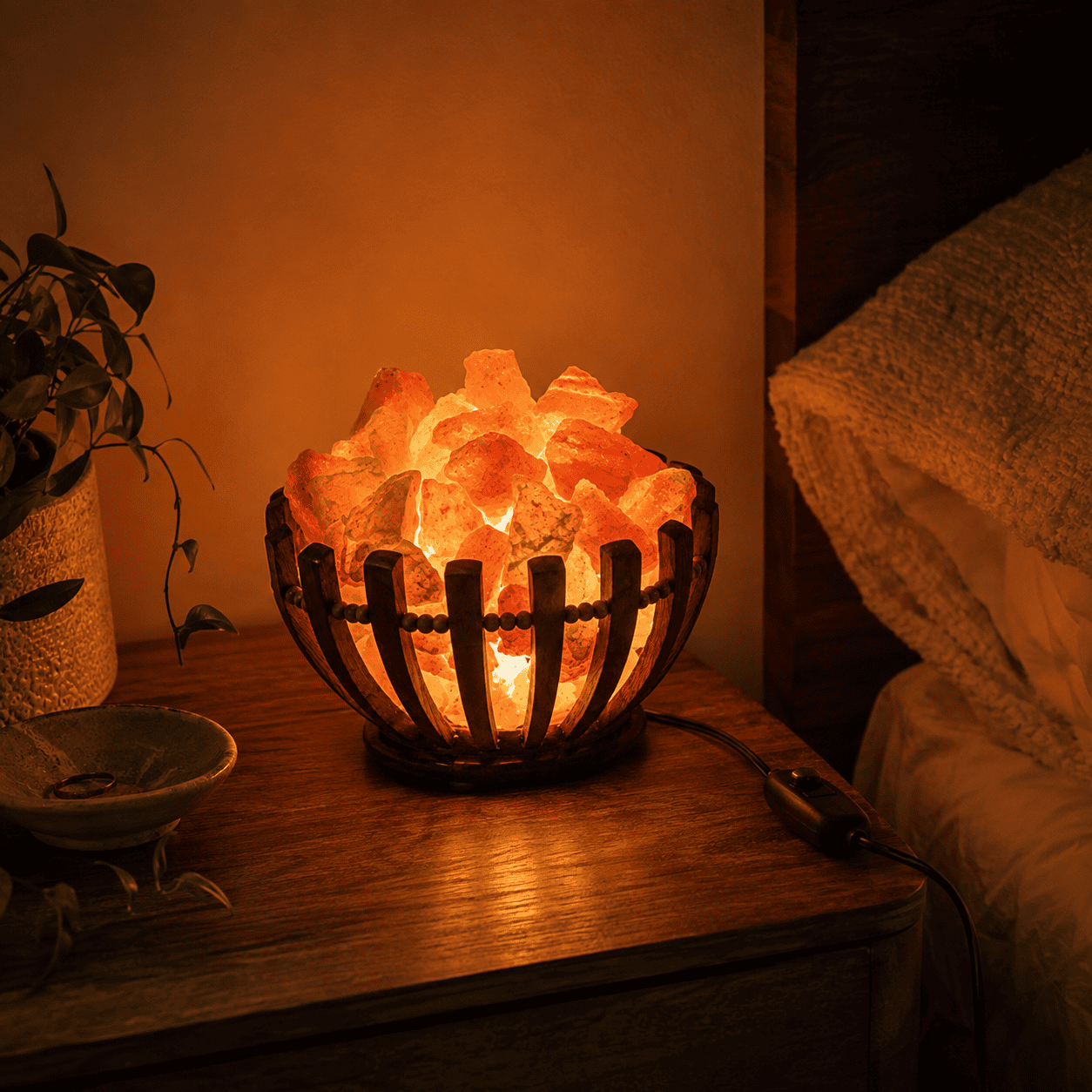


Himalayan Salt Lamp Warning: NHS Advice, Dangers and Facts

There's no NHS warning on Himalayan salt lamps. Search for one and you won't find a page, a bulletin, or a statement, because the NHS has never issued guidance on them. What's actually behind that search are three separate things people run together: a 2017 product recall over faulty wiring, a genuine poisoning risk for cats, and ordinary electrical safety that applies to any small lamp. We sell these lamps, so it's worth being straight about all three rather than pretending the worry is baseless.
Is there an NHS warning about salt lamps?
No. The NHS website carries nothing on Himalayan salt lamps, and no UK health body has published guidance on them either. The "NHS warning" phrase seems to have spread the way these things do online, repeated by blog after blog until it reads as fact. What does exist is a real product recall from a few years back, and that's almost certainly what people are half-remembering.
The 2017 recall: what actually happened
In 2017, the US Consumer Product Safety Commission recalled two batches of rock salt lamps over shock and fire hazards. Michaels pulled its own-brand rock salt lamps under recall number 17-065, and Sportex recalled its salt rock lamps the same year, both because internal wiring could fail and either shock the user or ignite. Roughly 1.9 million units were involved across the two recalls combined. Buyers were told to stop using the lamps immediately and return them for a refund.
That recall was specific to two companies' 2016-era stock, not a defect running through every salt lamp ever made. The recall is also nearly a decade old now. Buy new from a seller who tests their electrics and you're not buying into it. But it's the real event behind the "warning" people are half-remembering, so it deserves a straight answer rather than a dismissal.
Are salt lamps a fire risk?
Rarely, and almost always for a specific reason: an oversized bulb, a worn cord, or a lamp left running with damaged wiring. Our full fire safety guide goes through UK plug standards and bulb ratings in detail, but the short version is this. Fit the wattage the lamp is rated for, check the cord and holder occasionally for wear, and don't leave a lamp running unattended overnight if the wiring looks tired. That's the same advice you'd give for any small mains lamp in the house.
Is a salt lamp dangerous for cats?
Yes, and this is the one risk in this article that's genuinely worth taking seriously. Cats are drawn to lick salt lamps, and enough sodium from repeated licking can cause sodium ion poisoning, sometimes called salt toxicosis. The Pet Poison Helpline lists vomiting, diarrhoea, tremors, and in severe cases seizures as the signs to watch for. A small amount of salt goes a long way against a cat's body weight, so this can turn into an emergency fast. If your cat has been licking a lamp and starts showing any of those symptoms, call a vet straight away rather than waiting to see if it passes. Our guide on salt lamps and pet safety covers placement and prevention in full, including the sizes that are genuinely too heavy for a cat to get at.
Is a leaking salt lamp dangerous?
Not in itself. A lamp beading with moisture is reacting to damp air, not breaking down, and salt water dripping onto a shelf is a cleaning problem, not a safety one. The one place it turns into a real risk is if that moisture reaches the bulb holder or cord while the lamp is still plugged in, since water and live electrics are always a bad combination. Unplug a leaking lamp before you clean it up, dry it off, and only plug it back in once it's dry. Our guide on why salt lamps leak has the full fix.
Running a salt lamp safely
Most of this comes down to a handful of habits rather than anything complicated.
- Fit the bulb the lamp is rated for, usually a small 15W bulb on an E14 fitting. Our bulb guide has the sizing by lamp weight.
- Keep it away from cats and small children who might lick or chew it.
- Check the cord and bulb holder now and then, and stop using it if either looks worn or damaged.
- Unplug it before cleaning, and let a leaking lamp dry out fully before switching it back on.
None of that is specific to salt lamps. That's the same care you'd take with any small electrical lamp sitting within reach of a curious cat.