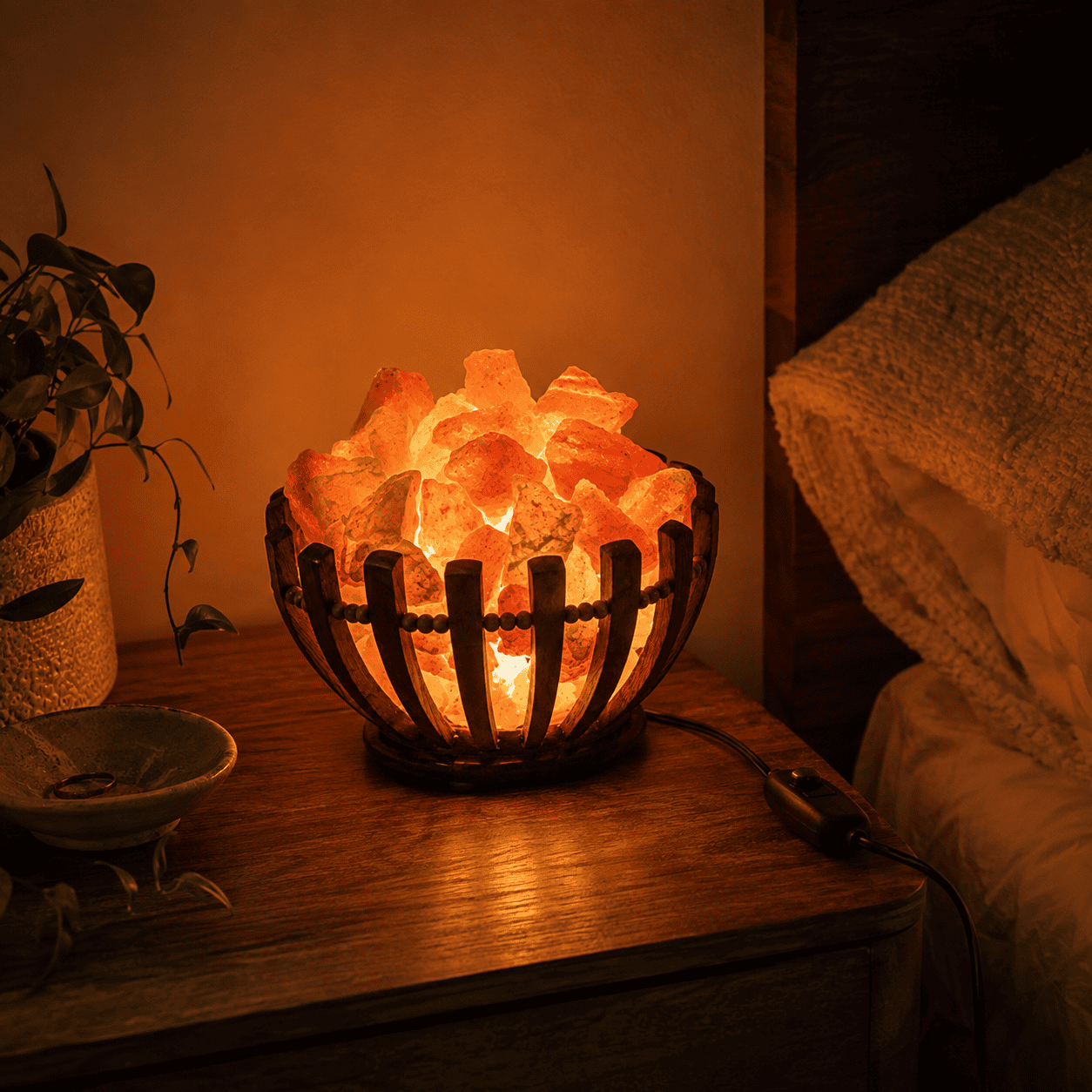


Himalayan Salt Buying Guide: How to Choose Quality Products

Buying Himalayan salt should be simple, and shops manage to make it confusing: restricted shipping, hidden prices, wellness promises nobody can verify. This sets out what actually matters when you buy a salt lamp or edible pink salt, so you can match a product to what you need, and it's honest about why The Himalayan Salt is a good fit for UK shoppers.
What Himalayan salt actually is
It's a rock salt, mined mainly in Pakistan. Chemically it's around 96 to 98 percent sodium chloride, and the last couple of percent is trace minerals like iron, which is where the pink comes from. Those minerals sit in tiny amounts, and the iodine content is negligible. Gram for gram the sodium is identical to ordinary table salt, so treat it like any other salt and go easy.
Getting that straight helps you read the claims on a pack. Genuine Himalayan salt is a lovely, minimally processed, additive-free salt. It isn't low-sodium, and decorative lamps don't have proven medical or air-purifying effects. An honest retailer describes it plainly instead of talking it up.
What to look for in quality Himalayan salt products
Whether it's edible salt or a lamp, a few quality signals hold across the board.
For edible Himalayan salt
- A short, clear ingredient list. Good pink salt lists salt and nothing else, no anti-caking agents.
- the right grind: fine for everyday seasoning and baking, coarse for grinders, pickling and finishing.
- Honest labelling. Claims should stick to flavour, mineral character and the lack of additives, not blown-up health benefits.
- resealable, moisture-resistant packaging that keeps it dry and free-flowing.
For salt lamps and decorative pieces
- Natural colour variation. Real lamps run pale pink to deep amber and are never perfectly uniform.
- irregular, hand-carved shapes, since smooth moulded symmetry hints at synthetic or lower-quality work.
- Solid construction. A stable wooden base and a properly fitted cord and bulb matter for safety and longevity.
- realistic claims: lamps are mood lighting, ambience is genuine, air purification and health cures aren't. For sizing and fittings, how to choose a Himalayan salt lamp goes further.
Comparing your buying priorities
Different shoppers weigh these differently. The table maps common priorities to what to check before you buy.
| Your priority | What to check | Why it matters |
|---|---|---|
| Authenticity | Colour variation, irregular shape, additive-free ingredient list | Confirms genuine, minimally processed Himalayan salt |
| Everyday cooking | Grind size, resealable packaging, clear labelling | Ensures the salt suits your recipes and stays usable |
| Gifting and decor | Gift-ready packaging, stable base, dimmer cord | Makes the item safe, attractive, and ready to give |
| Value and delivery | Transparent pricing and shipping terms | Avoids surprises and hidden costs at checkout |
Why The Himalayan Salt is a strong UK choice
We're a UK retailer built specifically around genuine Himalayan salt, from edible fine and coarse salts to hand-carved natural salt lamps and crafted salt lamps. Product pages describe sourcing and materials plainly, delivery is free within the UK, and the freshest pieces usually turn up in new arrivals first.
The one honest limitation: the range is aimed at UK customers, so international shipping is more limited. For UK buyers who care about authenticity, additive-free edible salt, and decorative pieces that arrive ready to use, that focus works in your favour.
A quick reality check: Himalayan salt is a quality, additive-free salt with the same sodium as ordinary salt, and salt lamps are decorative mood lighting. Buy for flavour, craftsmanship, and ambience rather than for health claims that are not established.
Frequently asked questions
Is Himalayan salt healthier than table salt?
It's minimally processed and free of anti-caking agents, which some people prefer, but it carries the same sodium per gram as table salt and only trace amounts of other minerals. So it's not lower-sodium or meaningfully healthier. The usual guidance holds: UK adults are advised to eat no more than 6 g of salt a day.
What should I check before buying a salt lamp?
Colour variation, an irregular hand-carved shape, a stable wooden base, and a properly fitted cord and bulb. Treat it as lighting.
Which grind of edible salt should I choose?
Fine for everyday seasoning and baking, coarse for grinders, pickling and finishing. Plenty of kitchens keep both on the go, one in the shaker and one in the grinder.
Does Himalayan salt contain iodine?
Only negligible amounts. If you rely on salt for iodine, you'll need an iodised salt or another source.
Making your choice
The best buy is the one that fits how you'll actually use it: an additive-free edible salt in the right grind, or a well-made lamp for ambience. Put honest labelling, sensible packaging and clear delivery terms ahead of big claims. Browse the edible salt collection, read our 2026 guide to reading salt product labels, or the honest look at whether Himalayan salt is really healthier.