

What Actually Helps Household Allergies (and Where Salt Lamps Fit)
If you live with allergies, you've probably tried every gentle, natural-sounding fix going, and a Himalayan salt lamp is an easy one to fall for. Soft amber glow, big promises about cleaner air. This guide skips the myth-by-myth debate and does something more useful: it lays out what actually reduces allergens in a normal home, in rough order of what matters most, then puts the salt lamp where it honestly belongs. Which is a nice bit of ambience, not a treatment.
What actually triggers allergies indoors
Your immune system flags something harmless as a threat, releases histamine, and off you go: sneezing, itchy eyes, runny nose, and for some people wheezing or real trouble breathing. If you've got asthma, that reaction can turn serious.
The annoying bit is that your own home tends to concentrate the stuff that sets you off. The usual suspects:
- Dust mites and their waste, tiny and easily kicked back up into the air.
- Pet dander, the flakes of skin cats, dogs and the rest shed constantly.
- Mould spores, happiest in damp bathrooms, kitchens and rooms that never get aired.
- Pollen drifting in through open windows and settling into soft furnishings.
- VOCs, the fumes some cleaning products, paints and synthetic materials give off.
You're breathing this mix day and night, so indoor air quality really does shape how often and how badly you flare. That's why people go looking past the antihistamines, and why a salt lamp became such a popular natural hope.
Where the salt lamp claims come from
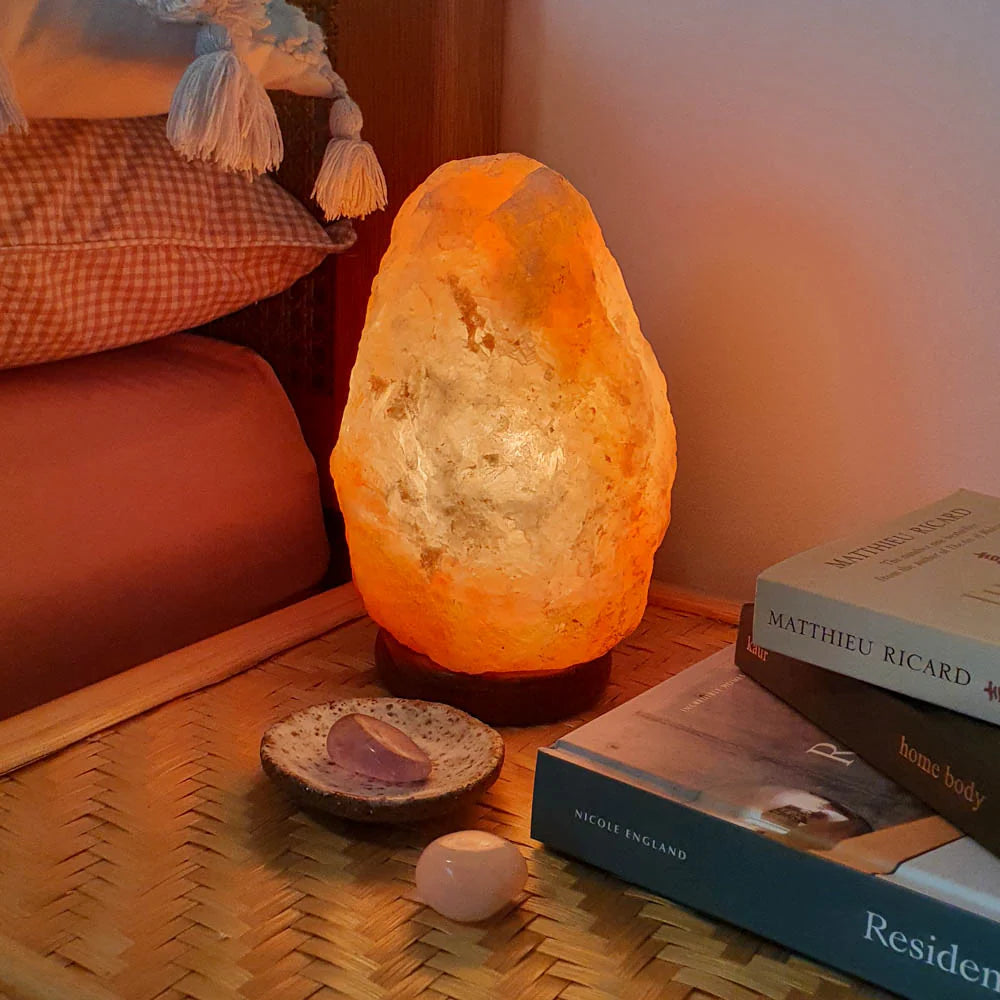
Salt lamps are carved from blocks of pink rock salt, with a bulb inside warming the crystal to that amber glow. The allergy story leans on two ideas. First, that salt pulls a little moisture from the air and airborne particles ride that moisture down onto the lamp. Second, negative ions, the kind you get in bucketloads near a waterfall and that get tied to a better mood.
The catch is scale. Whatever moisture the salt draws reaches maybe a couple of inches around the lamp, and normal air movement in a room dilutes that to nothing. The ion output is a rounding error next to the waterfalls and forests people compare it to. A crystal sitting still on a bedside table can't move and filter enough air to shift the allergen load in a room, and there's no evidence it relieves allergies at all.
The honest evidence
Controlled tests have salt lamps removing essentially none of the airborne particles or VOCs in a room, and no good study links them to fewer allergy or asthma symptoms. That doesn't make them useless. Warm low light genuinely helps a lot of people feel calmer, and lower stress can change how symptoms feel. But that's ambience working on your head, not filtration working on your air.
Here's a salt lamp lined up against the things that do have evidence behind them:
| Method | Particle removal | Symptom improvement | Evidence quality |
|---|---|---|---|
| Himalayan salt lamp | Negligible | None measurable | No supporting studies |
| HEPA air purifier | Up to 99.97% of fine particles | Meaningful reduction | Multiple clinical trials |
| HEPA-filter vacuuming | Moderate | Moderate | Good supporting evidence |
| Antihistamine medication | Not applicable | Significant | Extensive clinical evidence |
The real risk isn't the lamp. It's the delay. Trusting one can quietly push people to put off the steps that work, and symptoms drag on longer than they ever needed to.
What actually helps: a practical home plan
You don't have to pick between natural and effective. The best results come from stacking a few proven habits, roughly in this order of impact:
- See a GP or allergy specialist. Getting tested for your actual triggers makes everything after this sharper.
- Put a HEPA air purifier in the bedroom. You spend a third of your life in there. Pick one rated for about 1.5 to 2 times your room's floor area so it turns the air over enough.
- Wash bedding weekly at 60°C, which is the point where dust mites actually die. Cooler washes leave them.
- Keep humidity in check. Somewhere around 40% to 50% is the sweet spot. Drier and your airways suffer, damper than 60% and mould and mites move in.
- Vacuum with a HEPA-filter cleaner. A standard vacuum can spray fine particles straight back out; a HEPA one traps them.
- Thin out the soft furnishings. Carpets, heavy curtains and towers of cushions are dust-mite hotels. Hard floors and washable blinds help a lot.
- Shut the windows on high-pollen days, and check the Met Office pollen forecast, especially when it's warm, dry and windy through spring and summer.
So where's the lamp in all this? Outside the list, honestly. Keep it as décor for the warm glow it genuinely gives, and keep it maintained so it doesn't become its own little problem.
Using a salt lamp sensibly in an allergy home
If you love how a salt lamp looks, have one, no reason not to. Just be sensible with it.
- Stand it on something hard and stable, wood or tile, not carpet.
- Away from steamy spots like the bathroom, where the salt sweats and goes sticky.
- Give the surface a regular wipe with a dry or barely damp cloth so it doesn't turn into a dust magnet.
- Go for one with a safety-rated cord and bulb fitting, and keep it out of reach of young children and pets.
The lamp is the finishing touch on a calm, well-run room. The purifier, the hot-washed bedding and the medical advice are what actually work on your symptoms.
Frequently asked questions
Do salt lamps actually help with allergies?
No. They shift essentially no airborne particles in controlled tests, so enjoy one purely as ambience.
What genuinely reduces indoor allergens?
A HEPA purifier in the bedroom, bedding hot-washed at 60°C, HEPA-filter vacuuming, humidity held around 40% to 50%, fewer soft furnishings, and windows shut on high-pollen days. Get a GP or allergy specialist to pin down your triggers first and it all lands harder.
Can a salt lamp make allergies worse?
Only if you neglect it. Left uncleaned, the salt draws moisture and turns tacky, and a tacky surface holds dust nearby. A regular wipe and a dry spot away from damp sorts it.
Are salt lamps safe for asthma sufferers?
There's no sign they help asthma, and they must never stand in for prescribed medication or real air filtration. Fine as décor. Lean on your treatment plan for the actual symptom control.
Bottom line: build your allergy plan around the steps that are proven, and enjoy a salt lamp for the one thing it really delivers, a warm and calming glow. If you'd like one on that basis, our natural salt lamps and crafted salt lamps are the ranges to look at. For more of the science, there's our companion piece on Himalayan salt lamps and allergies: helpful or harmful? and the wider look at whether Himalayan salt lamps really purify the air.